













Sommario
Introduzione
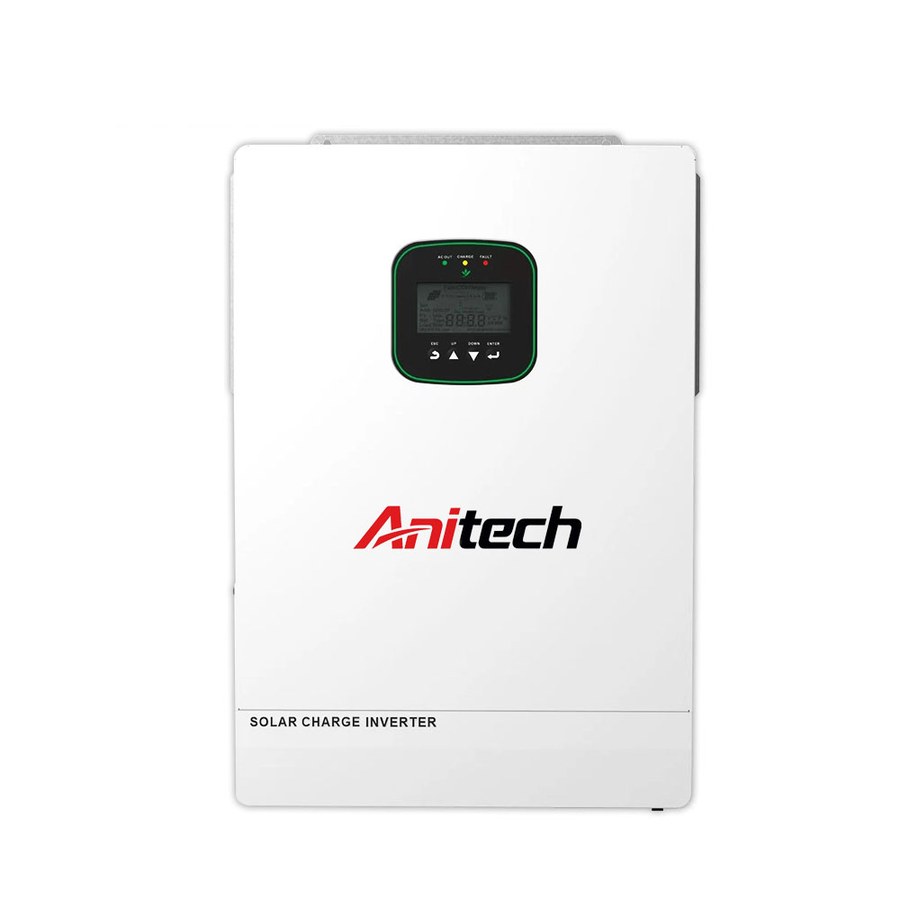
Choosing a PV inverter is one of the most important decisions in photovoltaic system design. Solar modules may determine how much DC electricity can be generated, but the inverter determines how that electricity is converted, controlled, monitored, and integrated with the rest of the electrical system. A poorly matched inverter can restrict an otherwise capable PV array, while a properly selected unit helps the entire system operate within stable electrical limits.
The challenge is that PV inverter selection cannot be reduced to a single power rating. Array voltage, input current, MPPT range, phase configuration, expected loads, environmental conditions, grid interaction, battery integration, and future system expansion all influence the final choice. Two inverters with similar rated output can therefore behave very differently when connected to the same installation.
This guide explains how to choose a PV inverter from a system-design perspective. Rather than focusing on one headline specification, it shows how the inverter should be matched with the photovoltaic array, electrical loads, storage requirements, and operating environment.
What Does a PV Inverter Actually Do?
A PV inverter converts the DC electricity generated by photovoltaic modules into AC electricity suitable for compatible electrical loads and grid-connected operation. That basic definition is important, but modern inverter technology performs several additional functions that directly influence system performance.
During operation, the PV inverter continually monitors voltage and current from the photovoltaic array. Its Maximum Power Point Tracking system adjusts the electrical operating point as solar conditions change, while the conversion stage produces AC power within the required output parameters. In grid-connected systems, the inverter also needs to synchronize its output with the electrical network and respond appropriately when operating conditions move outside permitted limits.
Modern models may additionally provide system monitoring, multiple MPPT channels, export management, battery communication, backup functions, and programmable operating modes. This is why the inverter should be viewed as an active control component rather than simply a converter placed between the panels and the electrical distribution system.
The general role and architecture of a inverter solare also illustrate why inverter design is closely connected to both photovoltaic generation and system-level electrical control.
Start PV Inverter Selection With the Load, Not the Product Catalogue
A common approach is to look at available inverter sizes first and then decide which one seems appropriate. In practice, a better method starts with the electrical demand the system is expected to support.
The load profile tells you how much AC output is actually required. This should reflect realistic simultaneous consumption rather than simply adding the nameplate power of every electrical device. Some equipment may operate continuously, while other loads run only occasionally. Motors, compressors, pumps, and similar devices may also create temporary startup demand that differs considerably from their normal operating power.
Understanding this behavior makes PV inverter sizing more meaningful. An inverter that looks suitable based only on average consumption may behave differently when several loads operate simultaneously or when equipment with significant startup demand is connected.
For three-phase installations, the load should also be considered at phase level. Total demand may remain within the inverter’s rated output while one individual phase becomes disproportionately loaded. System design should therefore reflect the actual way electricity will be consumed, not only the total installed electrical capacity.
Match the PV Array to the Inverter’s Voltage Range
PV array voltage is one of the first electrical parameters that must be matched with the inverter. Solar modules are connected into strings, and the voltage produced by each string changes with both the number of modules and environmental conditions.
The inverter normally specifies a maximum DC input voltage as well as an MPPT operating range. These two numbers serve different purposes. The absolute maximum represents a limit that should not be exceeded, while the MPPT range defines the voltage region in which the inverter can effectively track the array during normal operation.
A string can therefore be technically below the maximum input voltage while still being poorly designed for the inverter if its normal operating voltage frequently falls outside the useful MPPT range. This is particularly important because photovoltaic module voltage does not remain constant. Temperature and operating conditions can cause meaningful variation.
A reliable PV inverter design checks string voltage across expected conditions rather than relying on a single nominal value. This helps ensure that the array stays within both safe electrical limits and the inverter’s intended operating window.
Understand Why PV Input Current Matters
Voltage receives a great deal of attention during inverter selection, but current is equally important. Modern photovoltaic modules can deliver substantial current, and the inverter must be capable of accepting the current produced by the selected string configuration.
When strings are connected in parallel, current increases even though string voltage remains broadly similar. This means an array that looks suitable when evaluated only by wattage may still exceed an inverter’s permitted input current or MPPT current limit.
The PV inverter specification should therefore be compared with the module’s operating current, short-circuit current, number of parallel strings, and the maximum allowable current for each input or MPPT channel. These values should be examined together rather than independently.
This becomes particularly relevant when an existing PV system is expanded or when newer high-current modules are introduced. Increasing total array capacity without checking the electrical limits of the inverter can create a mismatch even if the new total wattage appears reasonable.
Why MPPT Configuration Can Change System Performance
Maximum Power Point Tracking helps a PV inverter adjust to changing solar conditions. Because photovoltaic modules do not produce their maximum available power at one fixed voltage throughout the day, the inverter continually changes its operating point to track suitable voltage and current conditions.
The number of independent MPPT channels becomes important when the photovoltaic array contains groups of modules operating under different conditions. Modules installed at different orientations, exposed to different shading patterns, or arranged on separate surfaces may not share the same ideal electrical operating point.
If electrically different arrays are forced onto the same tracker, one group can influence the operating point of another. Independent MPPT channels provide greater flexibility because different PV groups can be controlled separately within the inverter’s supported limits.
This does not mean that an inverter with more MPPT channels is automatically better. What matters is whether the MPPT architecture matches the real array layout. A simple uniform array may not require the same tracking configuration as a more complex installation with multiple orientations.
Single-Phase or Three-Phase PV Inverter?
Phase configuration should reflect the electrical distribution system rather than being treated as a feature upgrade. A single-phase PV inverter is designed for a single-phase AC environment, while a three-phase model distributes its AC output across three phases.
The correct option depends on the electrical architecture, connected equipment, total load, and the way demand is distributed. Three-phase systems can be particularly useful where larger loads or three-phase equipment are present, but phase imbalance should still be evaluated.
Some three-phase inverters permit a degree of unequal loading between phases, while others operate within more restrictive limits. This can become particularly important if the inverter also supports backup operation because the critical loads that remain active may not be distributed evenly.
The phase decision should therefore be made early in system planning. Trying to adapt phase architecture after PV strings, battery storage, and load circuits have already been defined can introduce unnecessary design limitations.
Key PV Inverter Specifications to Compare
A PV inverter datasheet contains many numbers, but several specifications have a direct influence on system compatibility. The most useful way to interpret them is to understand what each parameter controls within the complete photovoltaic installation.
| Specification | What It Controls | Why It Matters |
|---|---|---|
| Rated AC output | Continuous inverter power | Must suit realistic load and system demand |
| Maximum PV input voltage | Upper DC voltage limit | PV strings must remain below this value |
| MPPT voltage range | Normal tracking window | Determines suitable string operating voltage |
| Maximum input current | PV-side current capability | Must match module and string arrangement |
| Number of MPPTs | Independent PV tracking | Important for different array orientations |
| AC phase type | Output architecture | Must match the electrical distribution system |
| Conversion efficiency | Power conversion losses | Influences overall energy conversion |
| Battery interface | Storage compatibility | Relevant to storage-capable systems |
| Protection functions | Electrical operating safety | Supports appropriate system response |
| Monitoring functions | System visibility | Helps commissioning and fault analysis |
No single row in this table should determine the final selection. A reliable PV inverter should satisfy the complete combination of electrical requirements created by the PV array, loads, and system architecture.
PV Inverter Efficiency Should Be Read in Context

Efficiency is one of the most visible specifications on an inverter datasheet, but the highest published efficiency figure does not describe performance across every operating condition. A PV inverter works at different input powers, temperatures, voltages, and load levels throughout the day.
Real conversion performance may therefore vary according to operating conditions. MPPT behavior, standby consumption, thermal management, input voltage, and the amount of power passing through the inverter all influence actual system results.
This is why efficiency should be considered together with electrical compatibility. An inverter with an excellent peak efficiency figure will not compensate for an array that regularly operates outside the ideal MPPT range or for input current that does not match the module configuration.
In practical system design, a well-matched inverter is generally more valuable than one selected mainly around the highest headline efficiency number.
How Battery Storage Changes PV Inverter Selection
Battery storage adds another layer of electrical and control requirements. If storage is planned now or may be added later, the inverter architecture should be considered before the rest of the system is finalized.
A storage-compatible PV inverter may need to coordinate battery charging, battery discharge, solar generation, AC loads, and grid interaction. Compatibility depends on more than nominal voltage. Battery operating range, charging current, discharge current, chemistry, BMS communication, and supported operating modes may all affect integration.
Battery power and battery energy should also be treated as different design factors. A battery can contain substantial stored energy but still be limited in how much power it can deliver at one moment. If the inverter requires more discharge current than the battery or BMS allows, the battery becomes the limiting component.
For projects involving photovoltaic generation together with storage, Batterytailor’s PV and solar inverter product range includes configurations intended for different power levels and energy-system architectures. The important selection principle is to evaluate the inverter and battery as one coordinated system.
Consider Backup Requirements Before Choosing the Inverter
Backup capability should be defined before equipment is selected rather than added as an expectation after installation. Not every PV inverter can supply loads when the normal electrical source becomes unavailable, and even an inverter designed for backup requires an appropriate storage system and electrical configuration.
The first question should be which loads genuinely need backup. Essential lighting, communication equipment, controls, refrigeration, or other critical devices may have very different power requirements from the complete installation. Supporting selected circuits can therefore require a different inverter and battery configuration from supporting every connected load.
Startup demand should also be included in backup planning. A system that appears capable of supporting the steady operating power of a device may encounter a much larger short-duration demand when that device starts.
By defining backup loads, expected operating duration, battery capacity, and inverter output together, the system can be designed around realistic requirements rather than an overly broad assumption that “backup supported” means every circuit can operate normally.
Environmental Conditions Affect PV Inverter Reliability
An inverter does not operate in a laboratory environment throughout its service life. Temperature, ventilation, dust, moisture, mounting location, and enclosure protection can all influence long-term operating conditions.
Electronic components generate heat during power conversion, so suitable airflow and installation clearances are important. If ambient temperature becomes too high, some inverter designs may reduce output to protect internal components. This means environmental conditions can affect available performance even when the electrical design is otherwise correct.
Outdoor or exposed installations require additional consideration of enclosure protection and the manufacturer’s permitted installation conditions. An enclosure rating should not be interpreted as permission to install the inverter anywhere without considering direct exposure, ventilation, drainage, and environmental stress.
A suitable PV inverter should therefore be selected not only for its electrical characteristics but also for the physical environment in which it will actually operate.
Monitoring Should Help Explain System Behavior
Modern inverter monitoring can provide far more information than daily energy-generation totals. Useful platforms may show PV input, AC output, load demand, battery behavior, grid interaction, alarms, operating modes, and historical system data.
The most valuable monitoring functions are those that help identify why a photovoltaic system behaves in a particular way. If generation is unexpectedly low, data can help determine whether the issue is associated with PV input, MPPT operation, system settings, environmental conditions, or an inverter alarm.
For storage systems, monitoring becomes even more useful because energy can move in several directions. Understanding when the battery charges, when it discharges, and how the inverter prioritizes different energy sources can simplify both commissioning and ongoing system management.
For this reason, monitoring should be evaluated as an operational and diagnostic capability rather than simply an additional interface.
How to Avoid Oversizing or Undersizing a PV Inverter
Oversizing and undersizing are sometimes discussed as though inverter sizing could be solved with one universal ratio. In reality, appropriate sizing depends on the electrical characteristics of the photovoltaic array, expected generation profile, inverter input limits, load behavior, and overall system objective.
An inverter that is too small for the intended architecture may restrict usable AC output under certain conditions. An unnecessarily large inverter, however, does not automatically improve system performance. If the PV array, battery, or electrical loads cannot make effective use of the additional capacity, the larger rating may add little practical value.
The more reliable approach is to work from electrical compatibility outward. Confirm PV string voltage, current, MPPT configuration, AC requirements, battery capability where applicable, and expected operating conditions. Rated power can then be selected within that broader technical framework.
This method reduces the risk of using a single sizing rule where a system-specific assessment is required.
A Practical Five-Step PV Inverter Selection Method
A useful selection process begins by understanding the application’s actual electrical requirements. The first stage is defining the load profile, including simultaneous demand, startup behavior, phase configuration, and any backup circuits. This establishes what the inverter must ultimately support on the AC side.
The second stage is designing the photovoltaic array. String voltage, module current, number of modules, parallel strings, and MPPT requirements should all remain inside the inverter’s supported input limits. This ensures that the PV array and inverter are electrically compatible rather than simply similar in nominal power.
The third stage is considering storage requirements. Even if battery storage will not be installed immediately, planned future storage can influence which inverter architecture makes sense today. Battery voltage, current capability, communication, and operating modes should be considered before the system design becomes difficult to change.
The fourth stage is evaluating the installation environment and electrical protection. Cable sizing, DC and AC isolation, grounding, surge protection, ventilation, enclosure requirements, and installation clearances all contribute to system reliability.
The final stage is reviewing future expansion. Additional PV modules, batteries, or loads may alter the original operating conditions. A PV inverter that offers appropriate expansion flexibility can make future system development easier, but unused capacity should still be based on a realistic plan rather than indefinite oversizing.
Common PV Inverter Selection Mistakes
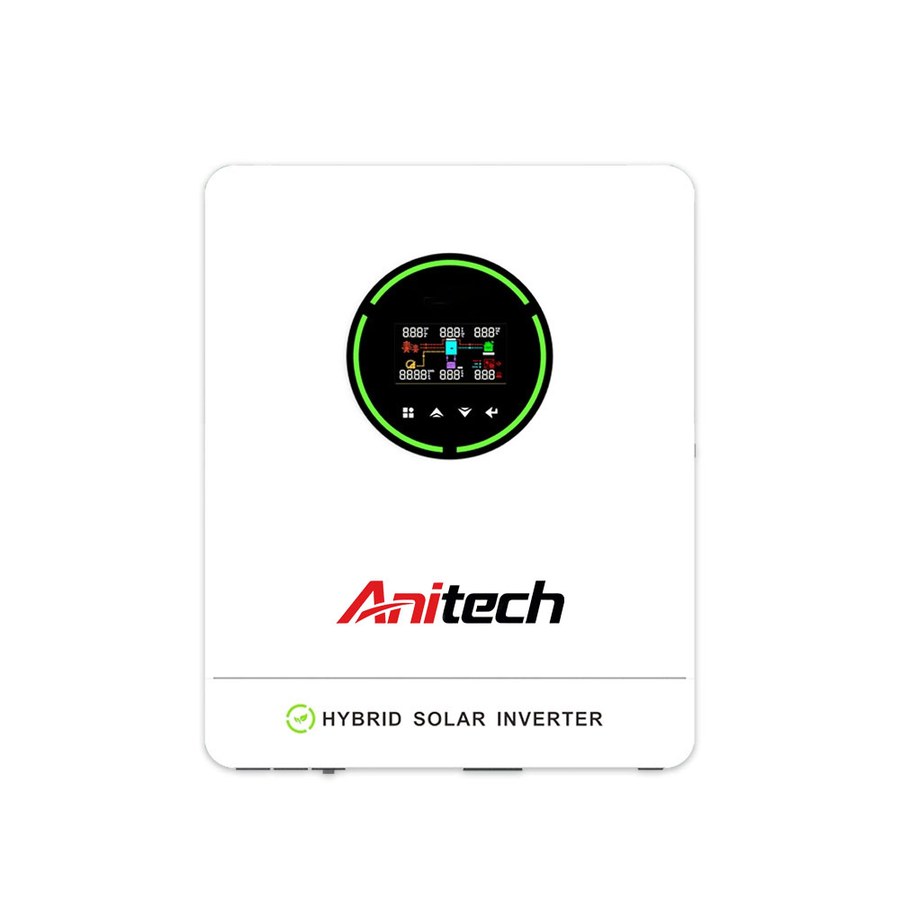
One of the most frequent mistakes is comparing inverters only by rated kilowatts. This ignores voltage, current, MPPT architecture, phase configuration, battery compatibility, and real load behavior. Two products with the same AC rating may therefore be suitable for very different installations.
Another common error is designing PV strings around total wattage without checking voltage and current. Solar modules form an electrical circuit, and the inverter must accept that circuit under changing operating conditions. Wattage alone cannot confirm compatibility.
Battery integration can also be underestimated. Similar nominal voltage does not guarantee that an inverter and battery will communicate correctly or support the same current limits. This becomes especially important in systems expected to provide backup power.
Finally, users sometimes focus heavily on one specification such as peak efficiency while treating protection, monitoring, installation conditions, and system expandability as secondary factors. Reliable photovoltaic design depends on how all of these factors work together.
Conclusione
Choosing a PV inverter is ultimately an exercise in system compatibility. The inverter must accept the voltage and current produced by the photovoltaic array, provide suitable AC output for the electrical system, operate within its intended environmental conditions, and coordinate battery storage or backup functions where those capabilities are required.
This is why rated output should be treated as only one part of the selection process. MPPT range, input current, string configuration, phase architecture, efficiency behavior, battery compatibility, monitoring, protection, and expansion potential all contribute to the final result.
A reliable system starts by defining the loads and photovoltaic array first, then selecting a PV inverter whose electrical limits and control capabilities fit those requirements. When the components are designed to operate together, the inverter becomes an effective control center for the photovoltaic system rather than a limiting point within it.
FAQ
What is a PV inverter?
A PV inverter converts DC electricity generated by photovoltaic modules into AC electricity suitable for compatible electrical loads and grid-connected operation. It also manages functions such as MPPT, system protection, monitoring, and, in compatible designs, battery or backup energy control.
How do I choose the correct PV inverter size?
Start with the PV array’s voltage, current, and string configuration, then consider realistic AC demand, phase type, startup loads, and storage requirements. The correct PV inverter should remain compatible with both the DC array and the intended AC system rather than being selected only by kilowatt rating.
Why is the MPPT range important for a PV inverter?
The MPPT range defines the voltage window in which the inverter can effectively track the photovoltaic array’s operating point. A string may remain below the maximum DC input voltage yet still perform poorly if its normal operating voltage frequently falls outside the supported MPPT range.
Can a PV inverter work with battery storage?
Some PV inverter architectures support battery integration, while others are primarily intended for direct grid-connected photovoltaic operation. Battery compatibility depends on inverter design, battery voltage, charge and discharge limits, BMS communication, chemistry, and supported operating modes.
What is the difference between a PV inverter and a solar inverter?
The terms are often used for closely related equipment because both describe inverters used with photovoltaic systems. “PV inverter” emphasizes photovoltaic generation, while “solar inverter” is the broader common term. The actual functions depend on whether the unit is on-grid, off-grid, hybrid, or storage-capable.
Need Help Choosing the Right PV Inverter?
If you’re unsure which PV inverter matches your photovoltaic array, electrical loads, battery requirements, phase configuration, or future system expansion, our technical team can help you evaluate the key compatibility factors. Contatta il nostro team tecnico for support with PV inverter selection and system configuration so the major components can operate within a coordinated electrical design.