












Tabla de contenidos
Introducción
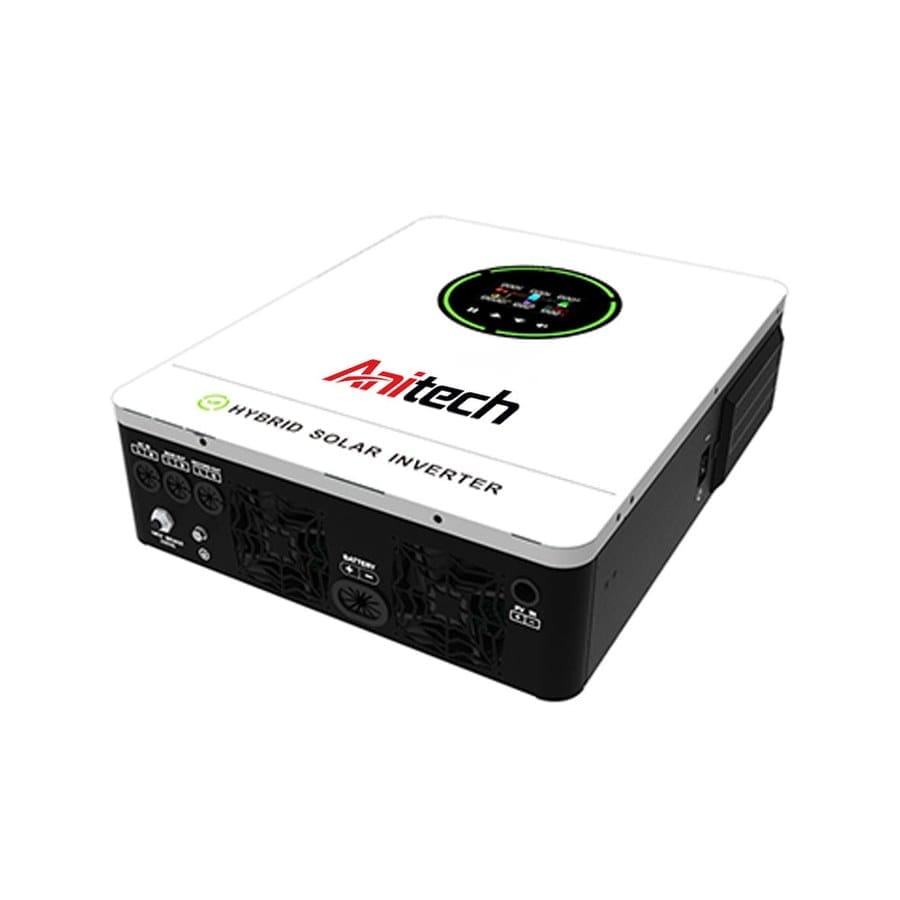
A solar energy system does not always fit neatly into either a completely grid-connected or completely independent operating model. Some projects need access to the electrical grid during normal conditions while also requiring battery storage and the ability to support selected loads when the grid is unavailable. This is where an on off grid solar inverter becomes particularly useful.
Instead of limiting the photovoltaic system to one operating environment, this inverter architecture can coordinate solar generation, battery storage, electrical loads, and grid interaction according to system conditions. During normal operation, the system may use solar electricity alongside the grid. When operating conditions change, stored battery energy can become more important, allowing compatible loads to continue receiving power according to the system design.
This flexibility does not mean that every on off grid solar inverter behaves in the same way. PV input limits, battery voltage, MPPT configuration, transfer behavior, backup output, phase architecture, monitoring, and energy-management settings can vary significantly between models. A reliable system therefore depends on matching the inverter to the complete energy architecture rather than choosing equipment by rated output alone.
What Is an On Off Grid Solar Inverter?
An on off grid solar inverter is designed to combine characteristics of grid-connected and independent solar power systems. During normal grid-connected operation, it can coordinate photovoltaic generation with local electrical loads and the grid. When the system is designed with compatible battery storage and backup functions, it can also support selected loads without relying continuously on the grid.
This makes the inverter different from a conventional grid-tied model whose primary role is to convert PV power while synchronized with an external electrical network. It also differs from a traditional off-grid inverter designed primarily around an independent combination of solar generation, batteries, and loads.
The main advantage is operating flexibility. The inverter can form part of a system that uses the grid when appropriate but also incorporates battery storage for greater control over generated energy. The broader concept of a inversor solar helps explain how photovoltaic conversion, grid synchronization, and storage-related functions can be integrated within modern solar architectures.
An on off grid solar inverter should therefore be viewed as an energy-management component rather than simply a device that changes DC electricity into AC electricity.
How an On Off Grid Solar Inverter Works
The operating process begins with the photovoltaic array. Solar modules generate DC electricity, which enters the inverter through one or more PV inputs. The inverter’s MPPT circuitry adjusts the electrical operating point of the connected strings as solar conditions change, helping the system manage available photovoltaic power within its supported voltage and current ranges.
When solar generation is available, the inverter can convert that electricity into AC power for local electrical loads. If generation exceeds immediate consumption and a compatible battery is connected, surplus energy may be directed toward battery charging according to the selected operating strategy.
When solar production decreases, the system can draw additional energy from the battery or grid depending on its configuration. If normal grid power becomes unavailable, a properly designed inverter system may transfer selected loads to a backup energy path supported by the battery and available photovoltaic generation.
The important point is that these transitions depend on system architecture. Battery capacity, inverter backup output, transfer capability, electrical wiring, and load selection all determine what actually happens when operating conditions change.
Benefit 1: Greater Flexibility Between Grid and Battery Power
The first major benefit of an on off grid solar inverter is the ability to coordinate more than one energy source. A conventional grid-connected system relies strongly on the electrical network when photovoltaic generation cannot meet demand, while a purely off-grid system relies on local generation and storage. An on/off-grid architecture creates more flexibility between these two approaches.
During periods of strong solar generation, photovoltaic energy can support the active loads and potentially charge a battery. When solar output falls, the system can use stored energy or grid power according to its programmed priorities and available resources.
This flexibility can be particularly valuable when electrical demand changes throughout the day. Instead of treating the PV array, battery, and grid as unrelated energy sources, the inverter can coordinate them within a single operating strategy.
The practical value comes from control rather than simply from having multiple energy sources. A well-designed system determines when each source should be used and how much battery capacity should remain available for later operation.
Benefit 2: Better Use of Solar Energy Through Battery Storage
Photovoltaic generation and electricity consumption rarely follow exactly the same pattern. Solar production may be strongest when local loads are relatively low, while higher demand may occur when PV output has already decreased.
Battery storage can help bridge this timing difference. An on off grid solar inverter can direct surplus photovoltaic electricity toward a compatible battery instead of requiring all generated energy to be used immediately.
Later, stored energy can support electrical loads when current solar generation is insufficient. This creates a more flexible relationship between when solar electricity is generated and when it is consumed.
Battery storage also adds another level of system planning. The battery must be able to accept the inverter’s charging current and provide sufficient discharge power for the intended loads. Its usable capacity should reflect the required operating duration, while the inverter and Battery Management System need compatible voltage and communication characteristics where applicable.
When reviewing Batterytailor’s soluciones de inversores solares, these battery-side requirements should be evaluated together with the PV input and AC output specifications rather than considered after inverter selection.
Benefit 3: Backup Capability for Selected Electrical Loads
One of the most important reasons to consider an on off grid solar inverter is the possibility of maintaining selected electrical loads when normal grid power is unavailable. However, backup performance needs to be understood correctly.
The word “backup” does not automatically mean that every electrical circuit can continue operating normally. Actual capability depends on the inverter’s dedicated backup output, battery discharge power, usable battery energy, transfer design, wiring arrangement, and the loads connected to the backup side.
A carefully planned system normally begins by identifying essential loads. These loads are then evaluated according to their continuous power demand and startup behavior. Equipment containing motors, pumps, compressors, or similar components may require substantially greater power during startup than during normal operation.
Battery capacity determines how much stored energy is available, while battery discharge capability determines how quickly that energy can be delivered. The inverter must support both the continuous and short-duration demand expected from the selected circuits.
This is why backup should be designed as a complete subsystem rather than assumed to be an automatic consequence of using an on/off-grid inverter.
Benefit 4: More Control Over Self-Consumption
Self-consumption refers to using locally generated photovoltaic electricity within the electrical system rather than depending entirely on another energy source whenever solar production changes.
An on off grid solar inverter can support this approach by coordinating photovoltaic generation with immediate loads and battery charging. When solar production exceeds current demand, stored energy can be reserved for later use. When generation falls, battery energy can support consumption according to system settings.
The exact operating strategy depends on the inverter. Some systems prioritize immediate load consumption before battery charging, while others allow reserve levels or charging schedules to be configured. The battery may also retain a defined amount of energy for backup rather than being fully discharged during normal operation.
This makes energy-management settings important. Two systems with similar photovoltaic and battery capacity can behave differently if their priorities are configured differently. Understanding these operating modes is therefore just as important as comparing the inverter’s rated power.
Benefit 5: Easier Integration of Solar, Storage and Monitoring
As photovoltaic systems become more sophisticated, system visibility becomes increasingly important. When electricity can flow between PV generation, batteries, loads, and the grid, users need a way to understand what the system is doing.
A modern on off grid solar inverter may provide monitoring information such as photovoltaic production, AC load demand, battery state of charge, battery charging and discharging power, grid interaction, operating mode, and fault status. This information can make system operation easier to interpret.
Monitoring becomes especially valuable when actual performance differs from expectations. If a battery is not charging despite available solar generation, the cause could involve battery state, charging limits, load priority, BMS restrictions, operating schedules, or inverter settings. Good monitoring data helps narrow down these possibilities.
The real benefit is therefore not simply remote visibility. Monitoring becomes part of commissioning, energy management, and troubleshooting, making it easier to identify whether the complete system is operating according to its intended strategy.
Benefit 6: More Options for Future System Development
Solar systems often change over time. A project may begin with a relatively simple photovoltaic array and later require additional battery storage, higher electrical loads, or expanded PV capacity.
An appropriately selected on off grid solar inverter can provide greater flexibility for these changes, but expansion should still be planned within the inverter’s actual electrical limits. Additional PV modules must remain within supported voltage, current, and MPPT limits, while additional battery capacity needs to fit the inverter’s battery architecture.
Future expansion also affects AC-side planning. Increasing inverter-connected loads may change simultaneous demand, startup requirements, phase balance, and backup expectations.
For this reason, expansion capability should not be confused with unlimited scalability. A stronger design identifies realistic future requirements and chooses an inverter architecture that provides reasonable headroom without creating unnecessary oversizing.
The goal is to make future system development easier while maintaining electrical compatibility at every stage.
On Off Grid Solar Inverter vs Other Inverter Types
Understanding where an on/off-grid architecture fits is easier when it is compared with conventional grid-connected and off-grid systems.
| System Factor | On Grid Inverter | Off Grid Inverter | On Off Grid Solar Inverter |
|---|---|---|---|
| Conexión a la red | Central to operation | Not required | Supported |
| Integración de baterías | Usually separate or limited | Común | Common in compatible systems |
| Independent load support | Generally limited | Core function | Possible through backup architecture |
| Conversión de energía fotovoltaica | Sí | Sí | Sí |
| Grid synchronization | Sí | Usually unnecessary | Yes during grid operation |
| Battery charging | Usually not central | Core function | Integrated in suitable models |
| Self-consumption control | Basic to moderate | Local energy use | More flexible |
| Backup operation | Requires separate architecture | Normal system role | Supported when correctly configured |
| Energy paths | PV, loads, grid | PV, battery, loads | PV, battery, loads, grid |
| Complejidad del sistema | Inferior | Moderate | Más alto |
The table shows why no single inverter type is appropriate for every application. A straightforward grid-connected photovoltaic system may not need the additional storage and backup functions of an on/off-grid design, while a fully independent energy system may be better served by an architecture designed specifically around off-grid operation.
An on off grid solar inverter becomes most useful when the project genuinely requires both grid interaction and storage-based operating flexibility.
Why Battery Compatibility Is Critical
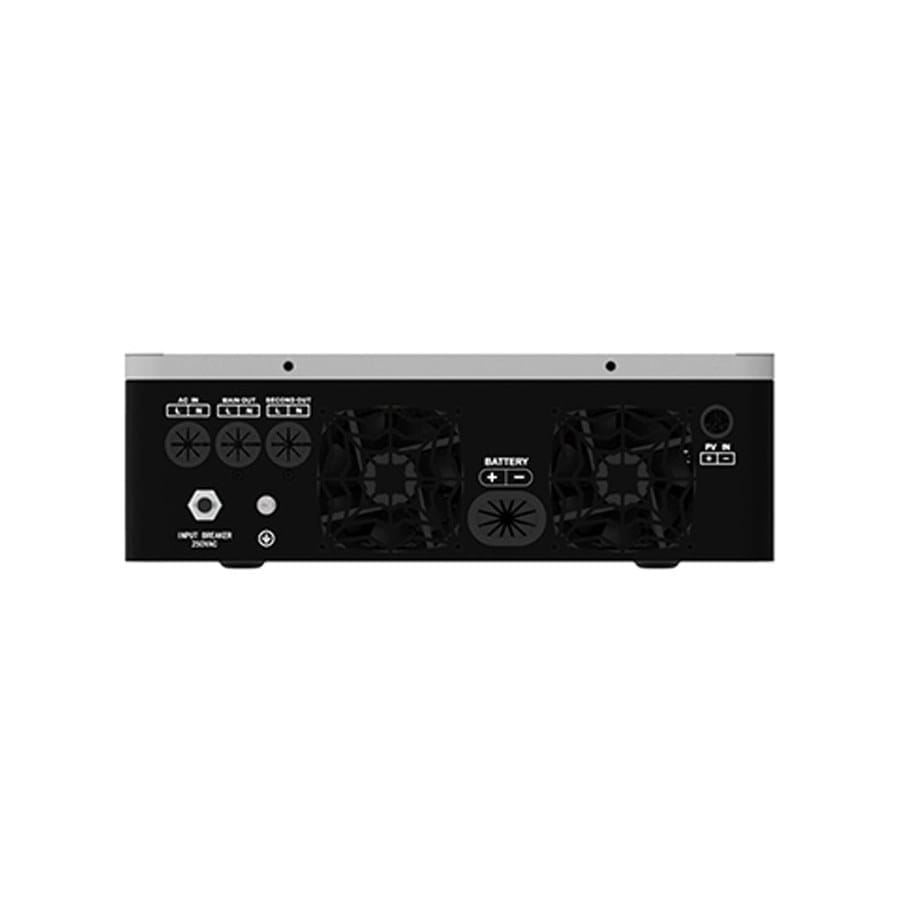
Battery compatibility is one of the most important technical requirements in an on/off-grid system. It begins with voltage, but matching nominal voltage alone is not enough.
The inverter has defined charging and discharging limits, while the battery and its BMS have their own allowable currents and operating conditions. These values must work together. If the inverter expects more discharge current than the battery can safely provide, the battery can become the limiting component.
Battery chemistry also affects charging behavior, voltage ranges, operating limits, and control requirements. In systems using active communication between the inverter and BMS, communication compatibility may allow information such as state of charge, temperature, current limits, and protection status to be exchanged.
Battery energy and battery power should also be evaluated separately. Energy capacity influences operating duration, while power capability determines whether the battery can support high instantaneous demand.
A reliable on/off-grid system therefore matches inverter power, battery power, and battery energy rather than treating capacity as a single specification.
MPPT and PV String Design Still Matter
Adding battery and grid flexibility does not reduce the importance of photovoltaic-side electrical design. An on off grid solar inverter still needs properly configured PV strings to operate effectively.
Module voltage changes with temperature and operating conditions, so the number of modules connected in series should be selected carefully. Maximum possible string voltage needs to remain below the inverter’s DC input limit, while normal operating voltage should remain within the MPPT range.
PV current also needs to fit the inverter. Parallel strings increase current, which means an array can exceed an MPPT input limit even if its total wattage appears appropriate.
Multiple MPPT channels can provide additional flexibility where different PV groups have different orientations or shading conditions. However, the number of trackers only creates value when the physical array is designed to make effective use of them.
The PV array should therefore be designed around voltage, current, MPPT behavior, and real environmental conditions rather than total panel wattage alone.
How to Size an On Off Grid Solar Inverter
Sizing should begin with the actual electrical load rather than with the inverter catalogue. The first step is to estimate realistic simultaneous demand and identify equipment that may have high startup requirements.
The next step is to evaluate backup demand separately. Not every load necessarily needs to operate when the grid is unavailable. Defining critical loads can produce a much more practical battery and inverter configuration than attempting to support the entire electrical system automatically.
PV compatibility should then be checked using module voltage, string configuration, input current, and MPPT requirements. Battery capability needs to be considered at the same time because the battery may need to support part or all of the inverter output during independent operation.
A well-sized system therefore connects four variables: AC load power, PV generation, battery discharge power, and battery energy capacity. Increasing only one of these values does not automatically improve the complete system.
Transfer Behavior and Backup Switching
One technical characteristic that deserves attention is how the system transitions when normal grid conditions change. If the inverter supports backup operation, it may need to switch selected loads from grid-connected operation to an alternative energy path.
The exact transfer behavior depends on inverter architecture. Certain electrical equipment is more sensitive to interruptions than other loads, so the requirements of connected devices should be considered when designing the backup subsystem.
Transfer capability should therefore be assessed together with backup output and battery power. A rapid transition provides limited value if the battery cannot support the connected demand, while a large battery cannot compensate for an inverter whose backup output is insufficient.
The practical approach is to evaluate the complete path from energy storage through the inverter to the backup circuits rather than treating switching time as an isolated performance number.
Single-Phase and Three-Phase System Considerations
Phase configuration is another important part of on/off-grid inverter selection. A single-phase architecture may be appropriate for systems built around single-phase loads, while three-phase installations require an inverter and electrical design suited to three-phase distribution.
In a three-phase system, total inverter output does not always tell the complete story. Load distribution across individual phases can affect usable capacity, particularly during backup operation. One heavily loaded phase may reach its limit even while total system demand remains below the inverter’s overall rating.
For this reason, three-phase projects benefit from phase-by-phase load analysis before equipment selection. Critical backup circuits should also be considered at phase level rather than only as one combined load figure.
Matching phase architecture early in the design process reduces the likelihood of discovering distribution limitations after the PV array, storage system, and electrical loads have already been configured.
Common On Off Grid Solar Inverter Selection Mistakes
A common mistake is choosing an inverter because its rated output looks large enough without checking whether the PV array and battery can actually support that output. A high AC rating cannot compensate for insufficient battery current or incompatible PV input.
Another mistake is assuming that every hybrid or on/off-grid inverter provides the same backup functionality. Backup output, switching behavior, battery requirements, and supported load arrangements can differ substantially between designs.
Battery selection can also become overly focused on capacity. A large energy rating does not guarantee sufficient discharge power for high-demand loads. The battery’s BMS and current capability must be able to support the inverter’s actual operating requirements.
PV string design is another area where problems occur. Maximum DC voltage, MPPT range, input current, and tracker allocation all need to match the array.
Most of these problems can be avoided by designing the system from its operating requirements first and selecting the inverter only after those requirements are clearly defined.
When Does an On Off Grid Solar Inverter Make Sense?
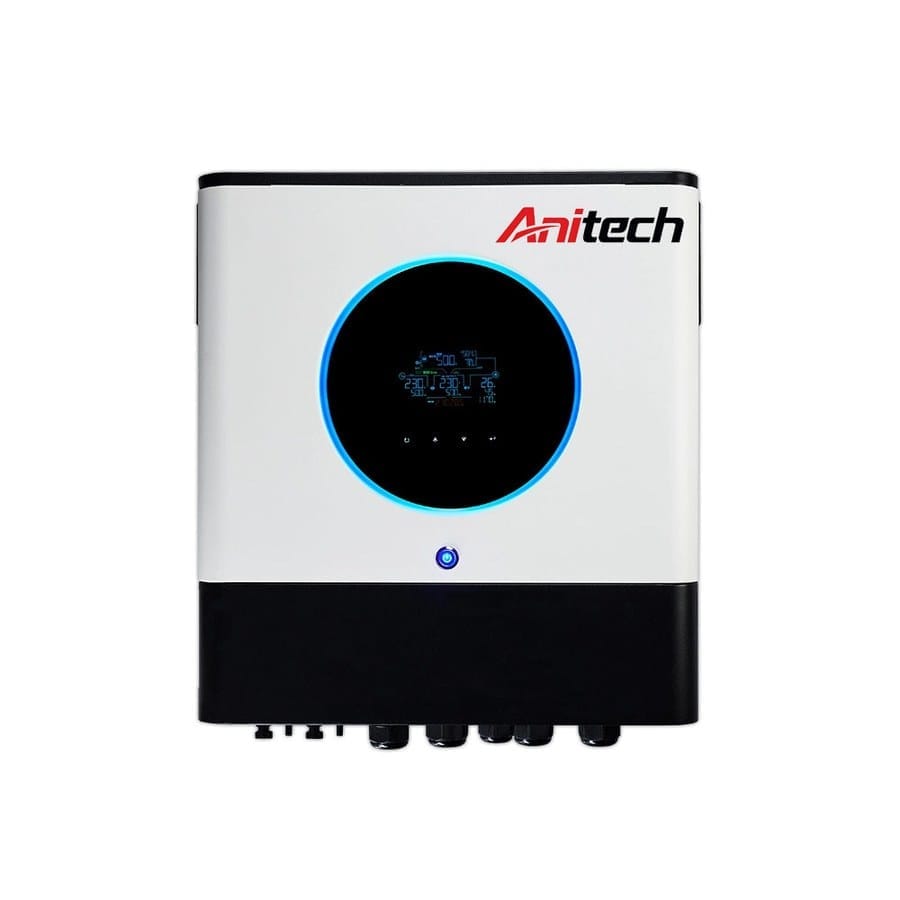
An on off grid solar inverter makes the most sense when a photovoltaic system needs the flexibility of grid-connected operation together with battery storage and a planned level of independent load support.
This may include systems where photovoltaic electricity is used during normal operation while stored energy is reserved for periods of lower solar generation or temporary grid unavailability. It can also suit applications where users want greater control over self-consumption and battery behavior.
However, additional functionality should not be selected simply because it is available. More complex inverter architectures require more careful PV design, battery matching, protection, monitoring, and commissioning.
The best use case is therefore one in which the system genuinely benefits from multiple operating modes. When the project only requires straightforward grid-connected photovoltaic conversion, a simpler architecture may be sufficient.
Conclusión
An on off grid solar inverter provides a flexible way to coordinate photovoltaic generation, battery storage, electrical loads, and grid interaction within one energy architecture. Its main advantage is not simply the ability to switch between two operating labels, but the ability to manage several energy paths according to changing system conditions.
This flexibility depends on correct system design. PV voltage and current must match the inverter’s input limits, MPPT configuration must fit the array, battery voltage and current capability must support storage operation, and backup circuits must reflect realistic load requirements.
The inverter should therefore be selected after the system’s operating priorities have been defined. When solar generation, battery storage, grid connection, and electrical loads are designed to work together, an on off grid solar inverter can provide a more adaptable foundation for solar-plus-storage applications.
Preguntas frecuentes
What is an on off grid solar inverter?
An on off grid solar inverter combines grid-connected photovoltaic operation with compatible battery and backup functions. It can manage energy between solar panels, batteries, electrical loads, and the grid, allowing the system to use different power sources according to operating conditions and configured priorities.
Can an on off grid solar inverter work without a battery?
Some models may support grid-connected PV operation without a battery, but independent backup functions normally require stored energy. Whether battery-free operation is supported depends on inverter architecture, so the manufacturer’s supported operating modes and battery requirements should be checked.
How does an on off grid solar inverter switch during a grid outage?
A compatible system detects changes in normal grid conditions and can transfer designated backup loads to a battery-supported power path. Actual behavior depends on inverter design, transfer capability, wiring, battery power, and the connected backup loads rather than the inverter name alone.
How do I size an on off grid solar inverter?
Start with simultaneous electrical demand and backup loads, then evaluate PV string voltage, MPPT range, input current, battery discharge capability, and usable storage energy. The inverter should be sized as part of the complete PV-battery-load system rather than only by panel capacity.
What is the difference between an on off grid solar inverter and a hybrid inverter?
The terms can overlap because many hybrid inverters support grid interaction and battery storage. What matters is the actual function: check whether the inverter supports grid-connected operation, battery charging, backup output, independent load supply, MPPT requirements, and the operating modes your system needs.
Need Help Choosing the Right On Off Grid Solar Inverter?
If you’re unsure which on off grid solar inverter best matches your photovoltaic array, battery platform, backup loads, phase configuration, or operating requirements, our equipo técnico can help evaluate the key system factors. Contact us to discuss an inverter and storage configuration designed around how your solar energy system actually needs to operate.