













Sommario
Introduzione
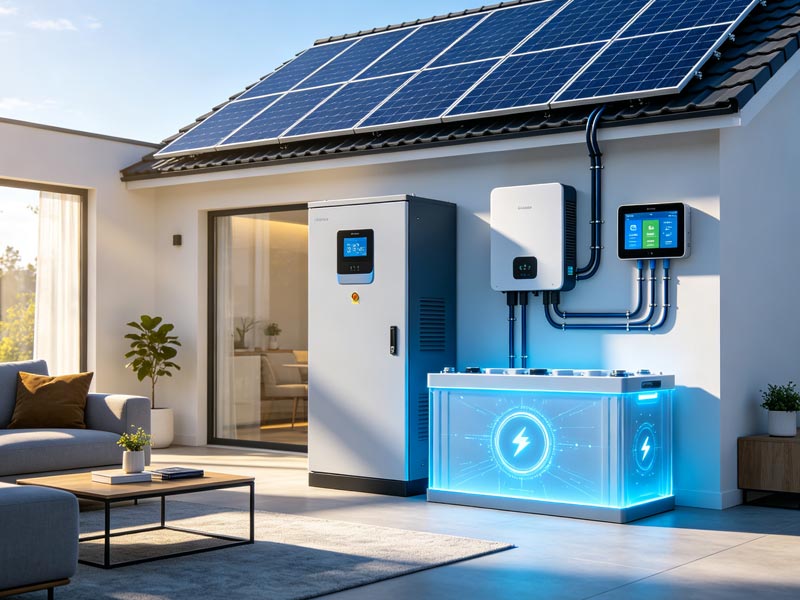
The role of a solar inverter is changing quickly. It is still responsible for converting the direct current produced by photovoltaic modules into alternating current that electrical equipment can use, but modern solar systems increasingly expect the inverter to perform much more than basic power conversion. It may also coordinate photovoltaic generation, battery storage, electrical loads, backup circuits, monitoring platforms, and grid interaction within the same energy architecture.
This change affects the way a solar inverter should be evaluated in 2026. Rated output remains important, but it no longer tells the whole story. MPPT design, battery compatibility, phase configuration, load behavior, monitoring capability, protection functions, operating logic, and future system expansion can all influence how effectively an inverter performs in a real installation.
For system designers, distributors, installers, and users comparing photovoltaic equipment, the most useful approach is therefore to stop treating the inverter as an isolated component. A stronger evaluation begins with the entire system and then asks whether the inverter can coordinate those components reliably under changing operating conditions.
Why the Solar Inverter Is Becoming the Control Center of a PV System
A traditional grid-connected photovoltaic system followed a relatively straightforward energy path. Solar modules produced DC electricity, the inverter converted it into AC electricity, and that power was then used locally or exchanged with the electrical grid. The inverter’s main job was conversion and synchronization.
Modern systems are often more complicated. A photovoltaic array may be connected alongside battery storage, backup loads, smart meters, energy-management controls, and multiple MPPT inputs. The inverter may need to decide whether available solar power should supply current loads, charge a battery, remain available for backup, or interact with the grid according to the selected operating strategy.
This means the inverter increasingly performs two jobs at the same time. The first is electrical conversion, while the second is energy coordination. That second role is becoming more important as solar-plus-storage systems become more common and users expect greater control over when and how generated electricity is used.
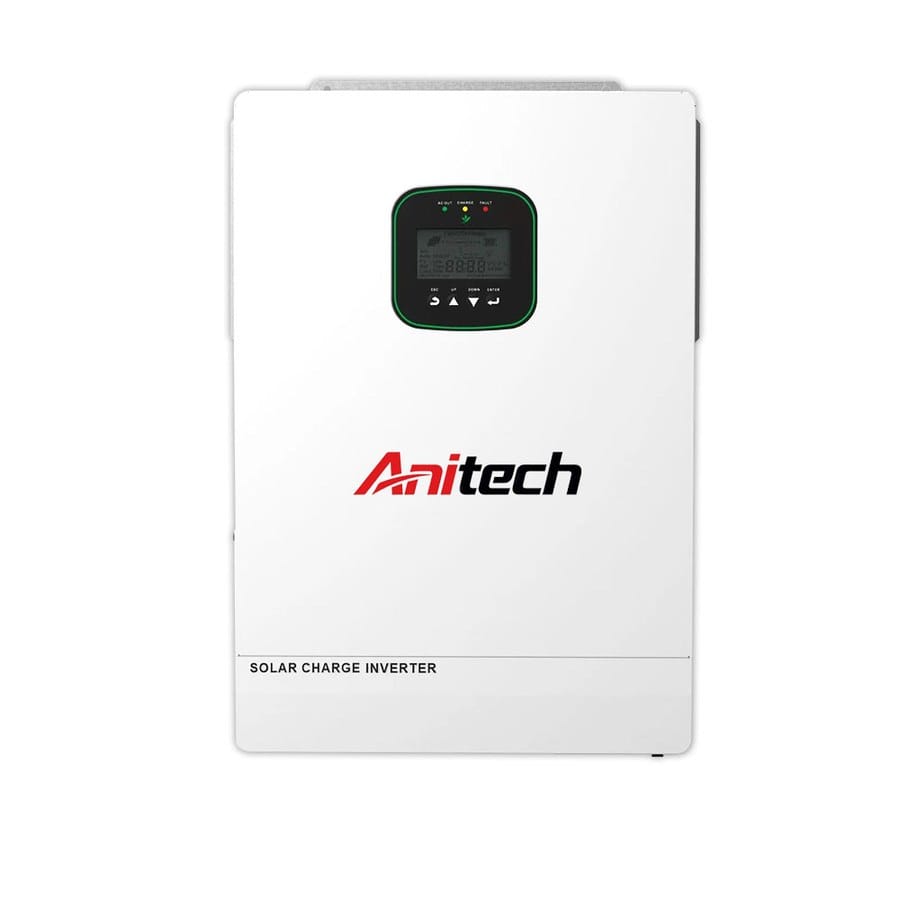
Quando si valuta Batterytailor's soluzioni inverter solari, it is therefore useful to consider the inverter as part of a wider system involving PV input, battery configuration, load demand, and operating priorities rather than evaluating its rated power in isolation.
Trend 1: Solar Inverters Are Becoming Energy-Management Platforms
One of the clearest developments in inverter technology is the expansion from power conversion toward energy management. In a modern system, electricity may flow between several sources and destinations during the same day. Solar generation changes with irradiance and module temperature, loads rise and fall according to user demand, batteries move between charging and discharging states, and grid conditions may influence how the system operates.
The solar inverter sits in the middle of these changing conditions. Its control logic determines how energy should move through the system based on current generation, load demand, battery state, and configured priorities. In self-consumption operation, for example, solar generation may supply active loads first before surplus energy is stored. Later, when solar output declines, stored battery energy may support those loads.
This is why the software and control logic inside an inverter are becoming almost as important as the conversion hardware. A technically capable inverter should not only convert power efficiently but also coordinate the connected system in a predictable and stable way.
Trend 2: MPPT Design Is Becoming More Important Than a Single Efficiency Figure
Maximum Power Point Tracking is one of the most important functions on the photovoltaic side of a solar inverter. The electrical operating point of a PV module changes throughout the day as sunlight, temperature, shading, and environmental conditions vary. MPPT allows the inverter to adjust that operating point so the connected array can operate effectively within the inverter’s supported range.
The presence of MPPT alone does not tell you whether an inverter is well suited to a particular array. The MPPT voltage range, maximum input current, number of independent trackers, and allowed string configuration are all important. A PV string may remain below the inverter’s absolute maximum voltage but still operate outside the most useful MPPT range under certain conditions.
Multiple MPPT channels can also improve design flexibility when different groups of modules experience different operating conditions. Arrays installed at different orientations or exposed to unequal shading may benefit from independent tracking rather than being forced to behave as one electrical group.
This is why a good solar inverter assessment should examine how the PV array and inverter interact electrically, rather than focusing only on nominal efficiency. The concept of maximum power point tracking is central to understanding how modern photovoltaic systems adapt to changing solar conditions.
Trend 3: Battery Compatibility Is Becoming a Core Inverter Requirement
Battery storage is increasingly influencing inverter selection. When a solar inverter is expected to work with an energy-storage system, compatibility must be evaluated at several levels. Nominal battery voltage is only the starting point. Charging current, discharge current, battery chemistry, state-of-charge control, communication protocol, protection limits, and Battery Management System behavior can all affect system performance.
A common design mistake is assuming that two components are compatible simply because their voltage ranges overlap. In practice, the battery may have lower charging or discharging limits than the inverter can support. If those limits are ignored, the battery may become the bottleneck even though the inverter itself has sufficient rated power.
Communication is also important in many lithium battery systems. When the inverter and BMS can exchange operating information, the inverter may receive battery state, current limits, temperature conditions, or protection status in real time. This can improve coordination between storage and power conversion.
For that reason, battery integration should be considered during inverter selection rather than added as an afterthought. A solar inverter intended for storage applications should be evaluated together with the battery platform, not as a separate device.
Trend 4: Hybrid, On-Grid, and Off-Grid Roles Are Becoming More Clearly Defined
The term solar inverter covers several different architectures, and the distinction between them matters because each is designed around a different energy-management objective. On-grid inverters focus primarily on photovoltaic generation and grid synchronization. Off-grid inverters are generally designed around independent power systems where battery storage plays a central role. Hybrid inverters combine grid interaction and battery integration within a more flexible operating structure.
The differences become clearer when the systems are compared directly.
| System Factor | On-Grid Solar Inverter | Off-Grid Solar Inverter | Invertitore solare ibrido |
|---|---|---|---|
| PV power conversion | Sì | Sì | Sì |
| Grid interaction | Core function | Solitamente non richiesto | Comune |
| Integrazione batterie | Limited or separate | Comune | Designed for integration |
| Backup operation | Usually limited | Comune | Depends on configuration |
| Energy-management scope | PV and grid | PV, battery, and loads | PV, battery, loads, and grid |
| Typical application logic | Grid-connected generation | Independent energy supply | Flexible solar-plus-storage |
| Complessità del sistema | Inferiore | Moderate | Più alto |
The table illustrates why inverter type should be selected according to the system’s intended operating mode. A hybrid inverter may offer greater flexibility, but that flexibility only has value when the installation actually requires battery storage, backup operation, or more advanced energy routing.
Likewise, an on-grid inverter may be the better fit for a straightforward PV system that does not need storage. The correct choice depends on the application rather than on which inverter appears to have the longest feature list.
Trend 5: Backup Power Is Moving from a Product Feature to a System Design Question
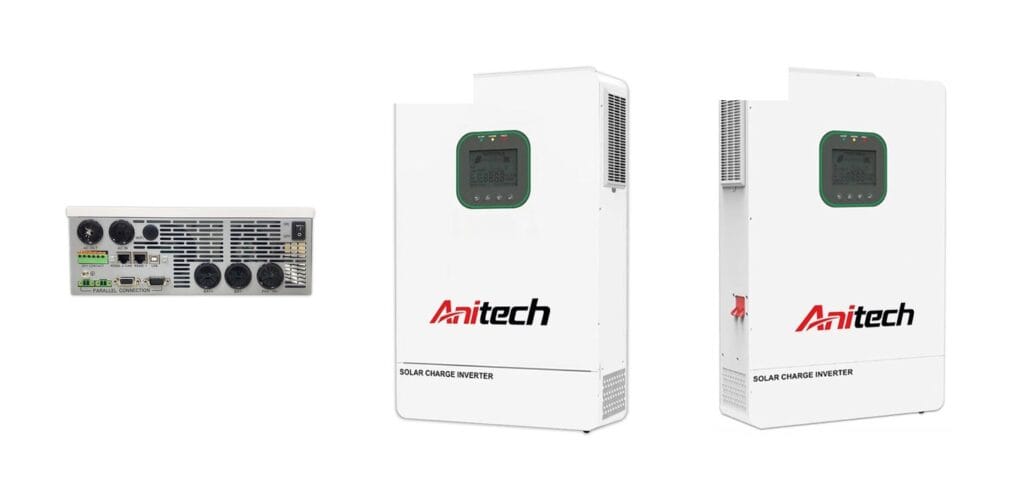
Backup capability is often described as an inverter feature, but reliable backup performance depends on the entire system. The inverter must have a suitable backup output, the battery must contain enough usable energy, the battery must be capable of supplying the required discharge power, and the connected loads must remain within the inverter’s operating limits.
This distinction becomes especially important when loads with high startup demand are involved. Pumps, compressors, motors, and similar equipment may require significantly more power during startup than during normal operation. A system that appears adequate when only continuous load is considered may behave differently when several startup events occur.
Battery energy and battery power should also be evaluated separately. A battery may contain enough stored energy to operate essential loads for a long period but still be unable to supply the instantaneous current required by a large load. Conversely, a battery capable of high discharge power may still have limited total operating duration if its usable energy capacity is small.
A better backup strategy therefore starts with the load profile. Determine which circuits genuinely need to remain active, how much power they require together, and which devices have significant startup demand. The inverter and battery can then be selected around those actual requirements.
Trend 6: Monitoring Is Evolving from a Display Function into a Diagnostic Tool
Monitoring was once mainly used to show how much solar electricity had been generated. Modern solar inverter systems can provide a much broader view of system operation, including PV production, battery state of charge, charge and discharge power, load demand, grid interaction, operating mode, alarms, and historical performance.
The value of this information goes beyond user convenience. Good monitoring can help diagnose why a system is behaving differently from expectations. If a battery does not charge even though PV generation is available, operating data may reveal whether the cause is a charging limit, battery state, BMS restriction, inverter setting, or load priority.
This shift from simple visualization to diagnosis is especially valuable in systems that combine solar, storage, and backup functions. As the number of interacting components increases, understanding the reason behind system behavior becomes more important.
For system operators, monitoring should therefore be evaluated by the quality and usefulness of the information it provides, not simply by whether a mobile interface or remote connection exists.
Trend 7: Single-Phase and Three-Phase Selection Is Becoming More Application-Specific
Single-phase and three-phase solar inverter systems serve different electrical environments, and the correct choice depends on the distribution network and the loads being supplied. A single-phase inverter may be entirely appropriate for a system built around single-phase loads, while a three-phase inverter becomes more relevant when the installation distributes power across three phases or includes equipment designed for three-phase supply.
Three-phase selection introduces another design issue: phase balance. Total inverter output does not necessarily describe how much power can be supplied on each individual phase. A system may remain within its total rated power while one phase becomes more heavily loaded than the inverter permits.
This issue can become even more important during backup operation, when only selected circuits remain active. If those loads are concentrated disproportionately on one phase, available inverter capacity may not be used effectively.
A stronger design process therefore evaluates not only total load but also load distribution. Understanding how demand is divided across phases can reveal limitations that would otherwise remain hidden until installation or commissioning.
Trend 8: Whole-System Compatibility Is Becoming the Main Selection Principle
The most important change in solar inverter selection is the shift toward whole-system compatibility. An inverter can have strong individual specifications and still be a poor fit for a particular photovoltaic project if its electrical limits do not match the components connected around it.
A PV array may exceed the inverter’s input-current limit even though its total wattage appears suitable. A battery may match nominal voltage but lack sufficient discharge current. A backup output may be available but unable to support the intended load arrangement. A three-phase inverter may have sufficient total power while one phase exceeds its allowable limit.
These examples illustrate a broader principle: the weakest compatibility point can limit the performance of the entire system.
Instead of asking which inverter has the highest output, widest feature list, or strongest single specification, it is more useful to ask whether the PV array, battery, loads, and operating strategy all remain inside the inverter’s supported electrical and control ranges.
A Five-Layer Framework for Evaluating a Solar Inverter
A practical way to evaluate a solar inverter is to divide the system into five connected layers: loads, PV input, battery integration, operating requirements, and installation conditions. This approach prevents one technical area from being considered in isolation.
The first layer is the load profile. Before choosing an inverter, determine realistic simultaneous demand, startup loads, phase requirements, and any circuits that must remain available during backup operation. This establishes the actual output requirement instead of relying on an approximate system size.
The second layer is the PV array. Module string voltage, operating current, open-circuit voltage, MPPT range, input-current limits, and the number of independent trackers should all be checked together. An array should not only remain below the inverter’s absolute limits but also operate effectively within its intended tracking range.
The third layer is battery compatibility. If storage is included, the inverter and battery must match in voltage range, charging current, discharge capability, chemistry, and communication requirements. Battery capacity should also reflect the intended duration of stored-energy operation.
The fourth layer is operating logic. The system may prioritize self-consumption, backup power, scheduled charging, grid interaction, or other energy-management strategies. These requirements determine which inverter functions are genuinely useful.
The fifth layer concerns installation. Cable sizing, electrical protection, grounding, ventilation, environmental exposure, communication wiring, and future expansion must all support the intended system architecture. When these five layers are considered together, inverter selection becomes much more predictable.
How to Size a Solar Inverter More Accurately
Solar inverter sizing is sometimes reduced to a simple comparison between PV array capacity and inverter output. That relationship matters, but a more complete assessment also considers the loads, battery, and future system architecture.
On the PV side, the inverter must accept the electrical characteristics of the array. This means checking string voltage and current rather than relying only on the total module wattage. Module arrangement can influence whether the array remains inside the inverter’s MPPT operating range across changing conditions.
On the load side, the inverter should support realistic simultaneous demand. It is usually more useful to understand which devices operate at the same time than to add the nameplate ratings of every appliance or piece of equipment in the system. Startup loads should be considered separately because their short-duration demand may be higher than steady-state consumption.
If battery storage is included, the battery must be capable of supplying the current required by the inverter. A large inverter cannot deliver its full battery-supported output if the connected battery or BMS imposes a lower discharge limit.
Future expansion should also be considered. If additional PV capacity, battery storage, or electrical loads may be added later, the original inverter architecture should leave enough flexibility to accommodate realistic changes without creating avoidable compatibility problems.
Why Efficiency Should Be Evaluated in Context
Efficiency is an important inverter specification because energy is lost during every conversion process. However, a single maximum efficiency figure does not describe how an inverter will perform across all operating conditions.
Real performance depends on the relationship between PV input, load level, operating temperature, MPPT behavior, battery charging or discharging, standby consumption, and system configuration. An inverter may operate differently at low load than it does near rated output, and system losses can also occur outside the inverter itself.
For this reason, efficiency should be viewed as one component of system performance rather than the only measure of inverter quality. A well-matched inverter with suitable MPPT ranges, battery compatibility, monitoring, and protection may deliver a stronger practical result than a model selected mainly because of one headline efficiency value.
This is another example of why system-level evaluation produces better decisions than specification-by-specification comparison.
Installation and Protection Matter as Much as Product Selection
The performance of a solar inverter depends partly on the quality of the equipment and partly on the quality of system integration. The PV side, AC side, and battery side each introduce different electrical conditions, so protection and wiring must be coordinated across the entire installation.
On the PV side, appropriate DC isolation, surge protection, overcurrent protection, compatible connectors, and correctly sized conductors help maintain safe operation. The AC side must be designed around the inverter’s output characteristics and electrical distribution arrangement, while battery systems introduce another high-current path that requires suitable conductor sizing and protection.
Environmental conditions also deserve attention. Ventilation, operating temperature, moisture exposure, dust, installation clearances, and enclosure protection can influence reliability over time. These requirements should be considered during system planning rather than treated as secondary details after the inverter has already been selected.
Grid-interactive systems also require appropriate synchronization and protective behavior. A reliable installation therefore depends on coordination between inverter capabilities, electrical design, protection devices, and commissioning procedures.
Common Solar Inverter Selection Mistakes
One of the most frequent mistakes is selecting a solar inverter only by rated power. Output capacity is important, but PV voltage, MPPT range, input current, battery limits, load behavior, and phase configuration can be equally important. A product that appears large enough by kilowatt rating may still be unsuitable electrically.
Another mistake is assuming that more capacity always produces a better system. Oversizing does not solve mismatched PV strings, insufficient battery current, inappropriate phase distribution, or unsuitable backup design. The goal should be compatibility rather than simply maximum capacity.
Battery integration is another area where errors occur. Similar nominal voltage does not automatically mean that an inverter and battery can work together effectively. Charging limits, discharge capability, communication, chemistry, and BMS requirements should all be checked.
Finally, system planning often focuses on normal operation while overlooking unusual operating conditions. Backup transitions, startup loads, fault behavior, thermal conditions, and protection responses should be considered before installation because these situations can reveal limitations that are not obvious during normal daytime solar production.
What Should Users Focus on When Choosing a Solar Inverter in 2026?
The most useful way to evaluate a solar inverter in 2026 is to begin with the intended application rather than with the product catalogue. First determine how much power the loads actually require, how the PV array will be configured, whether battery storage is needed, and what the system should do during low solar generation or an interruption of the normal power source.
Once these requirements are clear, inverter specifications become easier to interpret. MPPT ranges can be compared with PV string voltage, output capability can be compared with actual loads, battery limits can be checked against storage requirements, and monitoring features can be assessed according to the level of system visibility needed.
This approach also makes future expansion easier to plan. A solar inverter chosen around a clearly defined system architecture is more likely to remain useful when additional PV capacity, storage, or loads are introduced later.
The key principle is simple: choose the inverter that fits the system, rather than redesigning the entire system around an inverter that was selected first.
Conclusione
The solar inverter is evolving from a dedicated power-conversion device into one of the most important control elements in modern photovoltaic systems. MPPT design, battery integration, monitoring, backup functions, phase configuration, energy-management logic, and system compatibility are becoming increasingly important alongside conventional output and efficiency specifications.
The strongest approach to inverter selection is therefore system-based. PV modules, loads, battery storage, protection, operating priorities, and future expansion should all be considered before the inverter is finalized. When these components are matched correctly, the inverter can coordinate them as one integrated energy system rather than functioning as an isolated piece of equipment.
For users evaluating solar equipment in 2026, that shift in perspective is more valuable than focusing on a single headline specification. A properly matched solar inverter provides the foundation for reliable energy conversion, effective system control, and more flexible photovoltaic system design.
FAQ
What does a solar inverter do?
A solar inverter converts DC electricity from photovoltaic panels into AC electricity for compatible electrical loads and system operation. Modern models may also manage MPPT, monitoring, battery interaction, backup functions, and grid coordination, depending on their design and configuration.
How do I choose the right solar inverter size?
Start with realistic simultaneous load demand, startup loads, PV string voltage and current, and any battery requirements. Then compare these conditions with inverter output, MPPT limits, input current, phase configuration, storage compatibility, and potential future expansion.
What is MPPT in a solar inverter?
MPPT means Maximum Power Point Tracking. It adjusts the operating point of the PV array as sunlight, temperature, shading, and other conditions change. Its performance depends on the inverter’s supported MPPT voltage and current ranges as well as the electrical design of the connected strings.
Can a solar inverter work with battery storage?
Some solar inverters are specifically designed to integrate battery storage, while others mainly support grid-connected PV operation. Compatibility depends on battery voltage, charging and discharge limits, chemistry, BMS communication, and the operating modes supported by the inverter.
What is the difference between single-phase and three-phase solar inverters?
Single-phase inverters supply single-phase electrical systems, while three-phase models distribute power across three phases. The correct option depends on the electrical network, connected loads, phase distribution, backup requirements, and how much power each phase needs to support.
Need Help Choosing the Right Solar Inverter?
If you’re unsure which solar inverter best matches your PV array, battery configuration, electrical loads, backup requirements, or future system expansion, our technical team can help you evaluate the important compatibility factors. Contatta il nostro team tecnico for support with inverter capacity, system configuration, and application requirements. Build your solar energy system around components that are designed to operate reliably together.