












Sommario
Introduzione
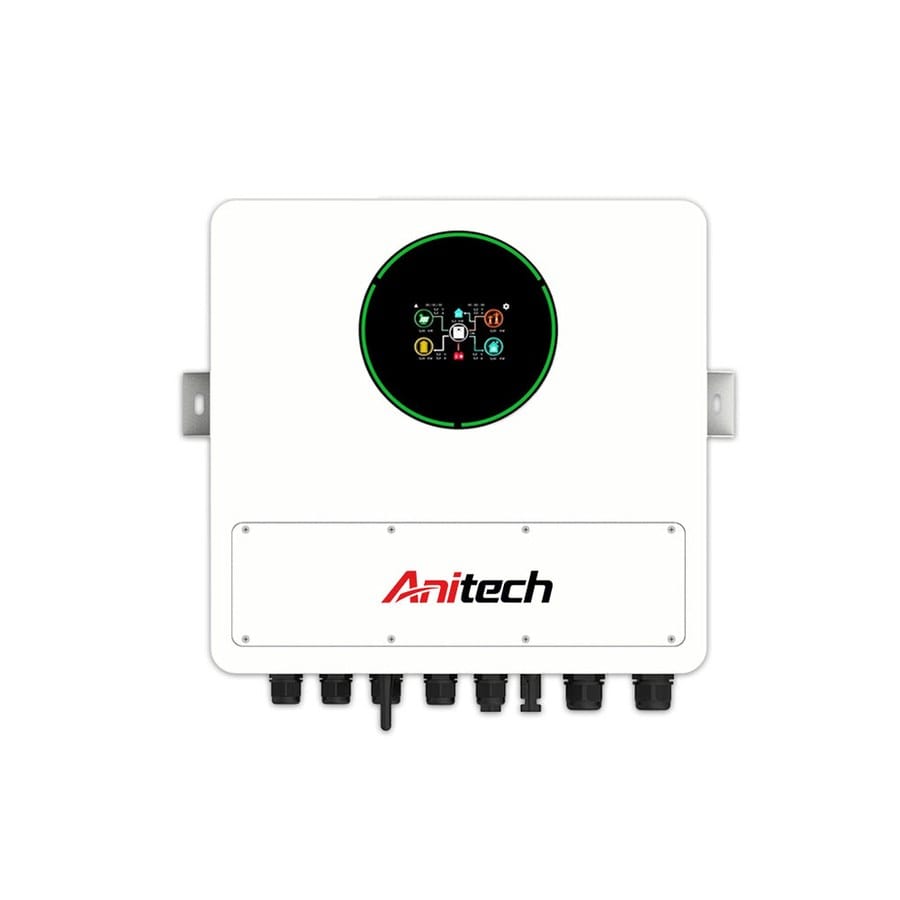
A photovoltaic system becomes much more demanding once battery storage is added. Instead of simply converting solar-generated DC electricity into usable AC electricity, the system must decide how available energy should move between the PV array, battery, electrical loads, and grid connection. Those decisions change throughout the day as solar production, battery state of charge, and load demand continuously vary.
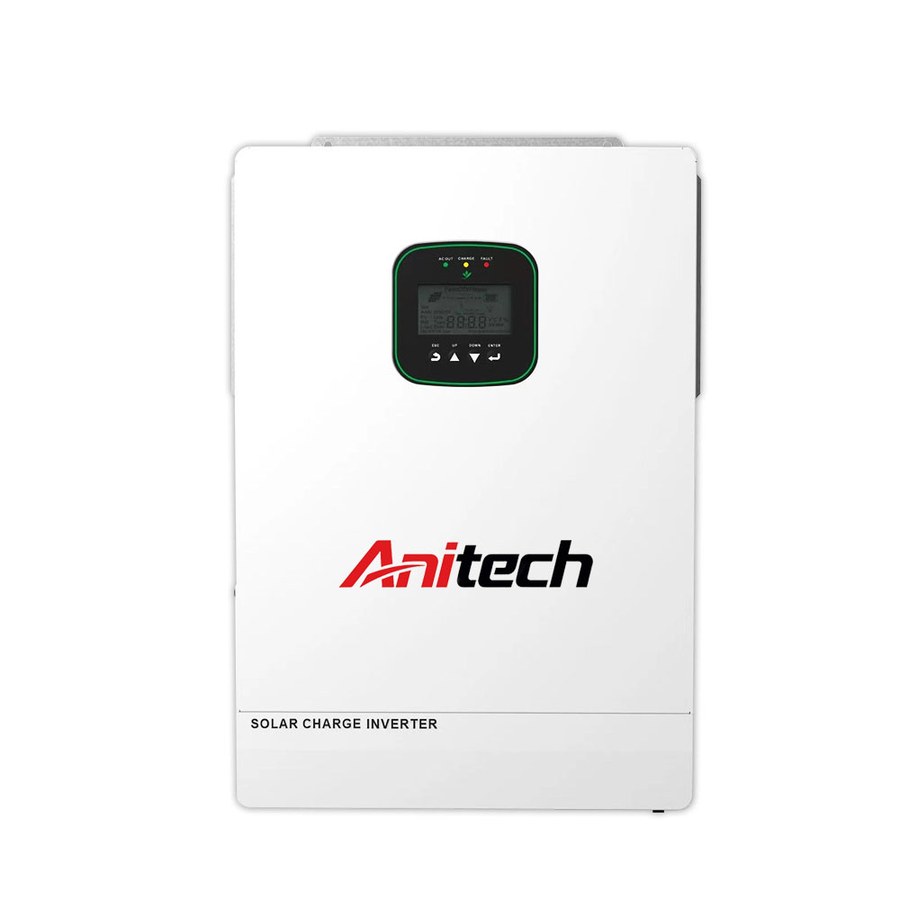
A hybrid PV inverter is designed to manage this more complex energy environment. It combines photovoltaic conversion with battery interaction and energy-management functions, allowing several parts of the system to operate through a coordinated control platform. This does not mean every hybrid inverter works in exactly the same way, but the architecture provides significantly more flexibility than a basic PV inverter designed only for direct solar conversion.
For anyone planning a solar-plus-storage system, understanding this difference is important. Selecting the correct hybrid PV inverter involves much more than comparing rated output. PV input characteristics, MPPT configuration, battery voltage, charging and discharging capability, backup requirements, phase type, communication, monitoring, and future expansion should all be considered as connected parts of the same design.
What Makes a Hybrid PV Inverter Different?
A conventional photovoltaic inverter mainly receives DC electricity from solar modules and converts it into AC electricity. In a straightforward grid-connected system, solar generation can supply local electrical loads, while other power flows are coordinated through the electrical network.
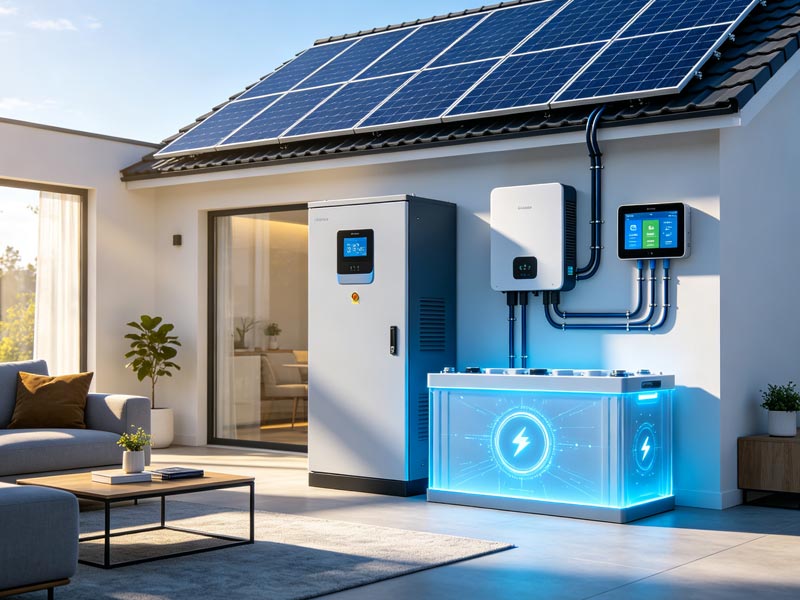
A hybrid PV inverter adds battery integration to this architecture. Depending on the model and system design, the inverter can direct surplus photovoltaic energy toward battery charging and later use stored energy when solar generation becomes insufficient. It may also coordinate grid electricity, backup circuits, and programmable energy-management strategies.
This changes the inverter’s role fundamentally. Instead of managing only one primary source of DC power, the inverter must coordinate several changing electrical conditions at once. Solar availability can rise or fall within minutes, loads may change suddenly, and battery charging or discharging limits can vary with state of charge, temperature, or BMS commands.
The value of a hybrid PV inverter therefore comes from its ability to manage energy flow intelligently while keeping each connected component within its permitted electrical limits.
How a Hybrid PV Inverter Manages Energy Flow
The easiest way to understand hybrid operation is to think about energy priority. During periods of strong photovoltaic generation, solar electricity may first supply active electrical loads. When generation exceeds immediate demand, the remaining energy can be directed toward a compatible battery if charging is permitted.
As solar output decreases, the balance changes. Stored battery energy may begin supporting the loads, reducing dependence on another available power source. If battery energy reaches a configured reserve level, the inverter can change operating strategy according to system settings.
Grid-connected systems add another possible energy path. Depending on the inverter architecture and configured operating mode, electricity may move between solar generation, battery storage, loads, and the grid. This creates a constantly changing energy balance rather than a fixed one-way flow.
The hybrid PV inverter is responsible for coordinating these transitions. Its effectiveness depends not only on conversion hardware but also on control logic, battery communication, sensing, and correctly configured operating parameters.
Why Solar-Plus-Storage Changes Inverter Selection
In a PV-only system, inverter selection can focus primarily on photovoltaic input characteristics and AC output. Once storage is included, a second major electrical subsystem must be considered.
The battery has its own voltage range, current limits, chemistry, protection logic, usable capacity, and communication requirements. The inverter must operate within these limits while also managing the PV array and AC system. A mismatch in any one area can restrict the performance of the complete installation.
For example, an inverter may be capable of delivering a high AC output, but that does not guarantee a connected battery can provide enough discharge current to support the same output. Similarly, strong photovoltaic generation does not mean the battery can accept all available surplus energy immediately. Battery charging limits may become the controlling factor.
This is why Batterytailor’s soluzioni inverter solari should be evaluated together with the intended battery platform, PV configuration, and electrical loads. In a hybrid system, the inverter is not an independent component; it forms part of the control relationship between generation, storage, and consumption.
MPPT Remains Critical in a Hybrid PV Inverter
Adding battery storage does not reduce the importance of photovoltaic-side design. A hybrid PV inverter still needs to extract usable energy from the PV array under changing environmental conditions, and Maximum Power Point Tracking remains central to this process.
PV module voltage and current change with sunlight, temperature, shading, orientation, and other conditions. Maximum power point tracking allows the inverter to adjust the electrical operating point of the connected array rather than treating solar output as fixed.
The MPPT operating range should therefore be checked carefully against the intended PV string design. Remaining below the absolute maximum DC voltage is not enough. Normal string voltage should remain within the inverter’s effective tracking range across expected operating conditions.
The number of independent MPPT channels also matters when different sections of the photovoltaic array experience different conditions. Separate roof orientations, unequal shading, or different PV groups can create different electrical operating points. A suitable MPPT architecture gives system designers more flexibility to manage these differences without forcing electrically dissimilar strings to behave as one group.
Battery Compatibility Goes Beyond Voltage
Battery voltage is one of the first specifications checked when selecting a hybrid PV inverter, but it should never be the last. Two components may appear compatible because their nominal voltages match while still differing in charging limits, discharge limits, communication protocols, and control behavior.
A lithium battery commonly includes a Battery Management System that monitors cells and applies operating limits. Depending on the design, the BMS may communicate information such as allowable charge current, discharge current, temperature status, state of charge, or protective conditions to the inverter.
If the battery and inverter are designed to communicate, protocol compatibility becomes an important part of system integration. Even without active communication, charging parameters still need to remain within the battery manufacturer’s permitted operating conditions.
The relationship between energy and power also matters. Battery capacity describes the amount of stored energy available, while discharge capability determines how quickly that energy can be delivered. A large-capacity battery can therefore still restrict inverter output if its permissible discharge current is too low.
A properly matched hybrid PV inverter system considers battery voltage, capacity, current, communication, chemistry, and operating strategy together.
Hybrid PV Inverter vs Standard PV Inverter
The difference between a hybrid inverter and a standard PV inverter becomes clearer when their system functions are compared.
| Design Factor | Hybrid PV Inverter | Standard PV Inverter |
|---|---|---|
| PV power conversion | Sì | Sì |
| MPPT control | Sì | Sì |
| Integrazione batterie | Core capability on compatible models | Usually separate or unsupported |
| Controllo della carica della batteria | Integrato o coordinato | Usually requires another system |
| Stored-energy discharge | Supported in suitable designs | Not a primary function |
| Grid interaction | Common on grid-capable models | Comune |
| Capacità di backup | Possible when designed for it | Usually limited |
| Energy-flow management | PV, battery, loads, and grid | Primarily PV, loads, and grid |
| Complessità del sistema | Più alto | Inferiore |
| Best suited to | Solar-plus-storage systems | Straightforward PV generation |
The comparison does not mean a hybrid PV inverter is automatically the better option in every installation. A straightforward photovoltaic system without battery storage may not need hybrid functionality. Additional features are valuable only when they correspond to real system requirements.
For a solar-plus-storage project, however, the hybrid architecture can simplify coordination because photovoltaic conversion and storage management are designed around the same control system.
Why Backup Capability Needs Separate Planning
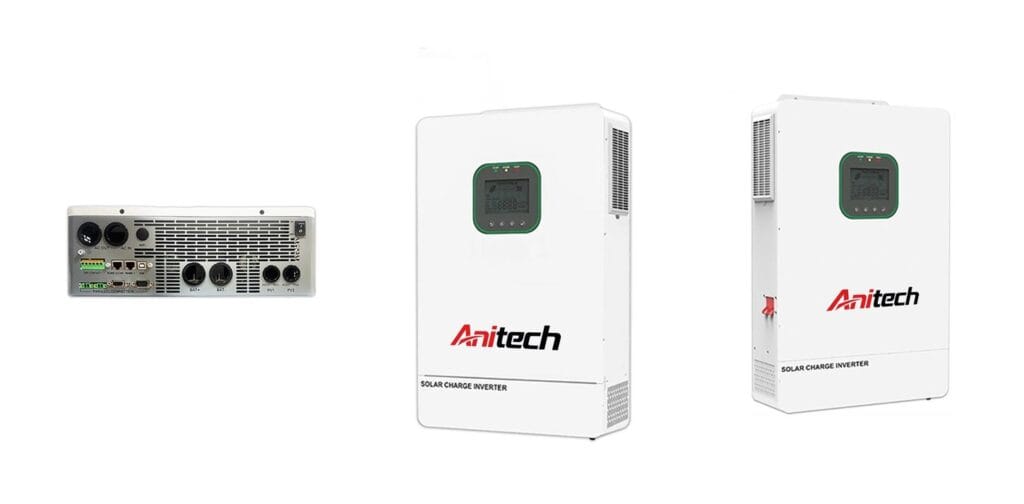
Backup power is one of the most attractive functions associated with hybrid systems, but it is also one of the most commonly misunderstood. A hybrid PV inverter does not automatically guarantee that every electrical load will continue operating during a power interruption.
Reliable backup requires the inverter, battery, wiring architecture, and critical loads to be planned together. The inverter must provide an appropriate backup output, while the battery must contain sufficient usable energy and provide enough instantaneous power for the connected equipment.
Startup demand is particularly important. Motors, pumps, compressors, and similar loads may briefly require substantially more power during startup than during normal operation. An inverter and battery combination that handles the steady load comfortably may still encounter difficulties during these short-duration events.
A stronger design begins by defining which loads genuinely need backup and how long they should operate. Once those requirements are understood, the inverter output, battery capacity, discharge capability, and backup circuit configuration can be matched accordingly.
How Self-Consumption Works With a Hybrid PV Inverter
One of the practical advantages of combining solar generation with storage is the ability to use more locally generated electricity within the system. A hybrid PV inverter can help coordinate this process by managing when PV energy supplies loads, charges the battery, or follows another configured energy path.
During periods when photovoltaic generation exceeds load demand, surplus energy can be stored instead of remaining immediately unused within the local system. Later, when solar production decreases, the battery can discharge to support consumption.
The exact energy priority depends on inverter settings and the installation architecture. Some systems may preserve a battery reserve for backup, while others may prioritize higher self-consumption. Scheduled charging and discharging may also be supported where appropriate.
This flexibility is one reason the hybrid PV inverter has become increasingly relevant to modern energy-storage systems. The objective is not merely to add a battery, but to control how solar and stored electricity are used across changing daily operating conditions.
Single-Phase and Three-Phase Hybrid PV Inverter Selection
Phase configuration should reflect the electrical distribution system and actual load requirements. A single-phase hybrid PV inverter is appropriate for many single-phase systems, whereas a three-phase architecture becomes relevant when loads are distributed across three phases or when three-phase equipment must be supplied.
For three-phase systems, total inverter output should not be considered alone. Phase-level limitations and allowable imbalance can affect how much power is available to individual loads. This becomes particularly important when backup circuits are unevenly distributed.
Imagine a system whose total backup demand remains below inverter capacity but where a large proportion of the load is concentrated on one phase. Depending on the inverter architecture, the phase-specific limit may be reached before total rated output is used.
For this reason, load mapping is valuable before selecting a three-phase hybrid PV inverter. Understanding how demand is divided across phases provides a more accurate basis for inverter sizing and backup planning than relying on total kilowatts alone.
How to Size a Hybrid PV Inverter Correctly
Sizing should begin with actual system behavior rather than a single PV capacity figure. The inverter needs to match the photovoltaic array electrically, but it also needs to support the intended AC loads and battery power requirements.
On the PV side, string voltage, operating current, open-circuit voltage, MPPT range, and input-current limits should all be checked. Total module wattage alone cannot confirm inverter compatibility because the inverter receives specific combinations of voltage and current.
On the AC side, realistic simultaneous demand is more useful than simply adding every connected device. Loads that operate continuously should be distinguished from intermittent equipment, while high-starting-current devices deserve separate attention.
The battery creates another sizing relationship. Its maximum discharge capability needs to support the level of battery-powered inverter output expected during normal or backup operation. Its usable energy capacity then determines how long that output can be sustained.
Sizing a hybrid PV inverter therefore requires three connected calculations: PV-side compatibility, AC load demand, and battery-side capability. A system is only as strong as the relationship among all three.
Why Bigger Is Not Always Better
There is a natural tendency to assume that selecting a larger inverter provides more flexibility. In practice, additional rated capacity only creates value when the surrounding system can make effective use of it.
An oversized hybrid PV inverter cannot compensate for PV strings that fall outside its MPPT range. It cannot force a battery to deliver more current than its BMS permits, and it cannot solve an unsuitable phase distribution or poorly planned backup circuit.
Large capacity can also create misleading expectations. If the battery is capable of supporting only part of the inverter’s rated output, the maximum AC rating may not be available during battery operation. The same principle applies when PV input or load demand is substantially lower than inverter capability.
A more useful design goal is appropriate headroom rather than maximum size. The inverter should accommodate realistic operating conditions and reasonable future development while remaining well matched to the current PV, battery, and load architecture.
Monitoring Is Especially Important in Hybrid Systems
A basic PV system may involve only a few major energy flows, but a hybrid system can move electricity among solar generation, storage, loads, and the grid. Monitoring therefore becomes particularly valuable because it helps users understand which energy source is supporting the system at a given time.
Good monitoring can reveal PV production, battery state of charge, battery charging and discharging, AC load consumption, operating mode, grid interaction, and inverter alerts. The information becomes useful when it helps explain system behavior rather than simply presenting a collection of numbers.
For example, if a battery remains at a high state of charge while the system continues drawing power from another source, monitoring data may help identify whether a reserve setting, discharge limit, load condition, communication issue, or operating schedule is responsible.
This diagnostic capability becomes increasingly important as hybrid systems grow more sophisticated. A well-designed monitoring platform helps support commissioning, daily operation, and troubleshooting throughout the system’s working life.
Protection and Installation Should Be Designed as One System
A hybrid PV inverter connects multiple electrical environments, which means protection must be coordinated across the PV side, battery side, and AC side. Each path has different voltage, current, and fault characteristics, so system safety cannot be reduced to one protective device near the inverter.
On the photovoltaic side, appropriate isolation, conductor sizing, connectors, surge protection, and overcurrent protection need to match the array design. The battery side can carry substantial DC current, making cable sizing, connection quality, protection, and thermal management particularly important.
The AC side must reflect inverter output, electrical distribution, grounding, and any dedicated backup circuits. If grid-connected operation is involved, appropriate synchronization and protective behavior also form part of the overall design.
Environmental conditions should be considered at the same time. Ventilation, temperature, moisture exposure, dust, mounting clearances, and enclosure suitability influence how reliably the hybrid PV inverter can operate over time.
A strong installation therefore treats the inverter as one element within an integrated protection and wiring architecture.
Common Hybrid PV Inverter Selection Mistakes
A frequent mistake is selecting equipment by rated output before defining the system. This reverses the ideal design process. The PV array, battery architecture, loads, and desired operating modes should establish what the inverter needs to do.
Another common mistake is checking battery voltage but overlooking current capability and communication. A battery may operate at the correct voltage while still being unable to supply the current required for the intended inverter output. Communication incompatibility can create additional limitations in systems that rely on BMS data.
PV string design can also be underestimated. A hybrid inverter still has maximum voltage, current, and MPPT limits, so adding battery functionality does not remove the need for careful photovoltaic electrical design.
Backup expectations create another source of problems. The term “backup” should never be interpreted as unlimited output. The actual capability depends on inverter design, battery power, battery energy, and the circuits connected to the backup side.
Most of these mistakes have the same underlying cause: evaluating components individually instead of designing the system as a whole.
A Four-Part Framework for Evaluating a Hybrid PV Inverter
A practical evaluation can be organized around four questions. The first is whether the photovoltaic array fits the inverter electrically. String voltage, current, MPPT range, and tracker configuration should all remain within supported limits under expected operating conditions.
The second question is whether the battery can work with the inverter as intended. Voltage, charge current, discharge current, usable capacity, BMS communication, chemistry, and reserve requirements should all be considered.
The third question concerns the loads. The inverter must support realistic continuous demand, short-duration startup requirements, phase configuration, and any backup circuits that are expected to remain operational.
The final question is how the system should behave. Self-consumption priorities, backup reserve, battery charging strategy, monitoring, grid interaction, and future expansion influence which inverter functions are genuinely useful.
This four-part framework is more reliable than comparing products specification by specification because it begins with the relationships that determine real system performance.
When Does a Hybrid PV Inverter Make the Most Sense?
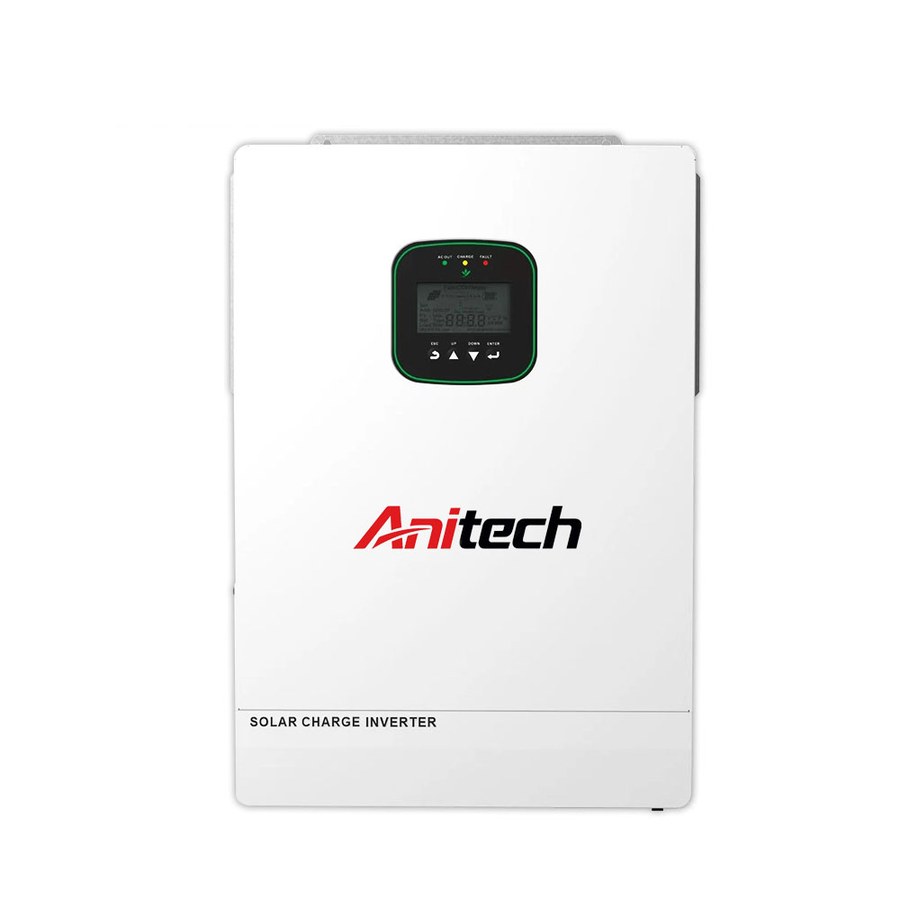
A hybrid PV inverter is particularly relevant when photovoltaic generation and battery storage are intended to operate as one coordinated energy system. It can be useful where stored solar energy is expected to support evening consumption, where selected backup loads need an alternative energy source, or where users want more control over how locally generated electricity is distributed.
The architecture is also useful when future storage is a realistic part of the system plan. Choosing an appropriate hybrid platform from the beginning can make it easier to design PV input, battery compatibility, monitoring, and electrical distribution around one control strategy.
However, hybrid functionality should not be selected simply because it offers more features. A straightforward PV installation without storage or backup requirements may be adequately served by a simpler inverter architecture.
The decision should therefore be based on how the energy system needs to operate. When generation, storage, and multiple energy paths must be coordinated, a hybrid PV inverter becomes much more valuable.
Conclusione
A hybrid PV inverter matters because modern solar-plus-storage systems need more than DC-to-AC conversion. They require a control point capable of coordinating photovoltaic generation, battery storage, electrical loads, backup functions, and grid interaction while respecting the electrical limits of every connected component.
Successful selection depends on system compatibility. PV voltage and current must match inverter inputs, MPPT architecture must suit the array, battery voltage and current must support the intended operating power, and the AC side must reflect actual load and phase requirements.
The strongest system designs therefore begin with the application rather than the inverter. Once the load profile, photovoltaic array, battery requirements, backup strategy, and operating priorities are understood, a suitable hybrid PV inverter can be selected around those conditions.
That system-level approach creates more value than choosing equipment by one headline specification. A well-matched hybrid PV inverter becomes the coordination point that allows solar generation and battery storage to function as one integrated energy system.
FAQ
What is a hybrid PV inverter?
A hybrid PV inverter converts photovoltaic DC power into usable AC electricity while also supporting compatible battery storage. Depending on its design, it can coordinate PV generation, battery charging and discharging, electrical loads, backup functions, monitoring, and grid interaction within one system.
Can a hybrid PV inverter work without a battery?
Some hybrid PV inverter models can operate without a connected battery, while others may be designed around specific storage configurations. Functions such as stored-energy backup require a battery, so supported operating modes and battery requirements should always be checked for the selected inverter.
How do I match a battery with a hybrid PV inverter?
Check the inverter’s supported battery voltage range, charge and discharge current, battery chemistry, BMS communication, and operating modes. The battery must also provide sufficient power for the intended load, so nominal voltage and storage capacity alone cannot confirm compatibility.
Is a hybrid PV inverter suitable for backup power?
It can support backup operation when the inverter architecture, battery system, and electrical wiring are designed for it. Actual backup capability depends on inverter output, battery usable energy, battery discharge power, startup loads, and which circuits are connected to the backup system.
What is the difference between a hybrid PV inverter and a normal PV inverter?
A standard PV inverter mainly converts solar-generated DC electricity into AC power. A hybrid PV inverter adds battery integration and more advanced energy management, allowing compatible systems to coordinate photovoltaic generation, storage, loads, and grid interaction through the same inverter platform.
Need Help Choosing the Right Hybrid PV Inverter?
If you’re unsure which hybrid PV inverter matches your PV array, battery platform, backup loads, phase configuration, or planned system expansion, our technical team can help assess the important compatibility requirements. Build your solar-plus-storage system around an inverter, battery, and photovoltaic architecture designed to operate together reliably.