













Table of Contents
Introduction
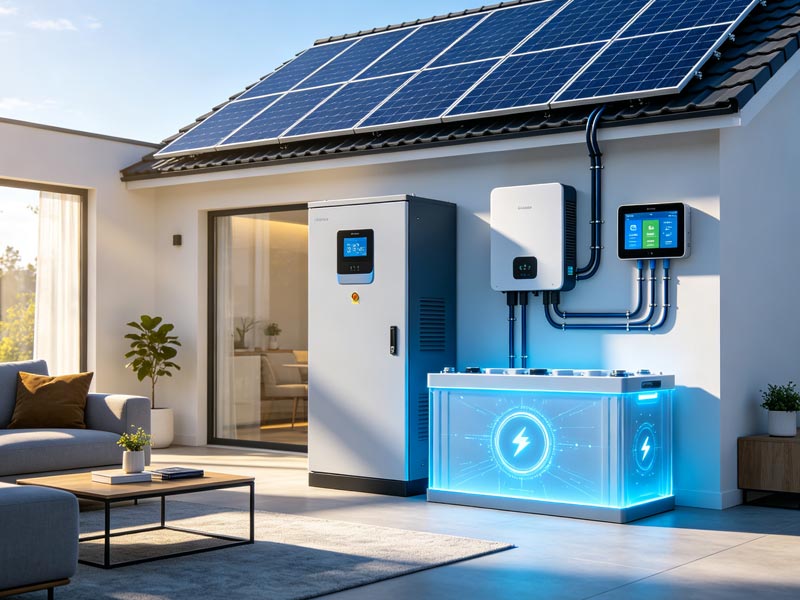
A solar power system becomes more complex the moment you add battery storage. Instead of simply generating electricity when sunlight is available, the system may need to decide whether solar energy should power current loads, charge a battery, remain available for backup, or interact with the electrical grid.
This is where a solar hybrid inverter becomes important.
Rather than functioning only as a power-conversion device, a solar hybrid inverter acts as a central energy-management point. It coordinates several different energy sources and destinations at the same time, helping solar panels, batteries, electrical loads, and the grid operate as one integrated system.
Understanding how this process works is useful whether you are designing a new solar-plus-storage system, comparing inverter technologies, or evaluating equipment for a future energy project. The important question is not simply how much power an inverter can produce. You also need to understand how intelligently it can manage energy under changing operating conditions.
What Is a Solar Hybrid Inverter?
A solar hybrid inverter is an inverter designed to manage electricity from solar panels while also supporting battery storage and, depending on the system configuration, grid interaction.
A conventional solar inverter primarily converts the direct current generated by photovoltaic panels into alternating current that can be used by electrical equipment or synchronized with an electrical grid. A hybrid inverter adds another important layer: battery management.
This means one unit may be responsible for several jobs:
- converting solar DC electricity into usable AC electricity;
- directing excess solar generation toward battery charging;
- drawing stored energy from the battery when solar output is insufficient;
- coordinating power exchange with the grid;
- maintaining selected backup loads when configured for backup operation;
- monitoring the condition of the solar array, battery, and electrical loads.
That combination is what makes the solar hybrid inverter particularly useful in modern solar-plus-storage systems.
The word “hybrid” refers to its ability to work with multiple energy sources and operating modes rather than relying exclusively on solar panels or the grid.
How Does a Solar Hybrid Inverter Work?
The easiest way to understand a solar hybrid inverter is to follow the movement of electricity through the system.
During daylight hours, photovoltaic modules generate DC electricity. The inverter receives this energy and evaluates several conditions: how much electricity the loads currently require, whether the battery needs charging, whether export is permitted, and whether any special operating schedule has been configured.
If solar generation is sufficient to cover the current load, the inverter can direct solar energy toward the load first. If additional energy is available, the remaining power may charge the battery.
When solar generation falls below load demand, stored battery energy can supplement the available solar electricity. If the battery does not provide enough power and the system is grid-connected, the remaining demand may be supplied by the grid.
The inverter therefore performs two tasks at once.
The first is electrical conversion.
The second is energy decision-making.
That second task is one of the biggest differences between a basic inverter and a modern hybrid system.
The Four Energy Paths Inside a Hybrid Solar System
A practical way to understand a solar hybrid inverter is to think of the system as four connected energy paths.
The first path is generation.
Solar panels generate electricity whenever suitable sunlight is available. The amount changes continuously with irradiance, temperature, shading, panel orientation, and other conditions.
The second path is consumption.
Electrical loads create demand. This demand may be relatively stable or change sharply when equipment starts and stops.
The third path is storage.
The battery acts as an energy buffer. It absorbs energy when generation exceeds immediate consumption and releases energy when demand exceeds available solar generation.
The fourth path is grid exchange.
In a grid-connected configuration, the grid can function as another source or destination depending on system settings and applicable connection requirements.
The solar hybrid inverter sits at the center of these four paths.
Its control system continually asks a simple but important question:
Where should the available energy go right now?
This perspective is useful because it prevents one of the most common misunderstandings about hybrid inverters. Their main value is not simply that they “work with batteries.” Their deeper function is coordinating energy movement among several parts of a power system.
Core Components and Functions of a Solar Hybrid Inverter
Although designs vary, several functions are especially important when evaluating a solar hybrid inverter.
Maximum Power Point Tracking, usually called MPPT, helps the inverter operate the PV array close to the point where it can produce useful power under changing solar conditions. Because panel voltage and current change throughout the day, MPPT continuously adjusts the electrical operating point.
The inverter conversion stage changes DC power into AC power for compatible electrical loads and grid interaction.
The battery charging stage manages how electrical energy enters the battery. Charging parameters must remain compatible with battery voltage, chemistry, current limits, and battery-management requirements.
Many modern battery systems also include a Battery Management System, or BMS. Depending on the equipment design, communication between the inverter and BMS can allow the inverter to receive information about battery status, allowable charging current, allowable discharge current, temperature conditions, and protection states.
Another important element is energy-management logic. This controls the priority given to solar power, batteries, loads, and the grid.
Monitoring functions may then allow system operators to review PV generation, battery status, load demand, operating history, and fault information.
Taken together, these functions make the solar hybrid inverter more like a system controller than a simple power converter.
Common Solar Hybrid Inverter Operating Modes
A hybrid inverter can normally support several operating strategies, although the exact functions depend on the specific model and system design.
In self-consumption mode, solar energy is generally used to supply active loads first. Surplus generation can then charge the battery. Stored energy may later support the loads when solar generation decreases.
In backup-oriented operation, the system maintains battery capacity so that selected circuits can continue operating when the normal grid supply becomes unavailable.
Some systems support scheduled battery charging and discharging. This allows stored electricity to be managed according to operating priorities rather than relying only on immediate solar availability.
Grid-assisted operation allows the system to combine solar, battery, and grid electricity when necessary.
Export-control functions can also limit or manage the amount of electricity sent toward the grid when supported by the inverter and required by the installation.
The important point is that operating mode affects real system behavior. Two installations using similar solar panels and batteries can perform very differently if their energy-management priorities are configured differently.
Solar Hybrid Inverter vs On-Grid and Off-Grid Inverters
The term “solar inverter” covers several different technologies. Understanding the distinction helps prevent inappropriate equipment selection.
| Feature | Solar Hybrid Inverter | On-Grid Inverter | Off-Grid Inverter |
|---|---|---|---|
| Solar PV input | はい | はい | はい |
| Battery integration | Designed for it | Usually not the main function | Common |
| Grid connection | Commonly supported | Required | Usually not required |
| Backup capability | Possible when properly configured | Generally not the primary purpose | Common |
| Energy routing | Solar, battery, grid and loads | Mainly solar, loads and grid | Mainly solar, battery and loads |
| Battery charging control | Integrated or coordinated | Usually separate or absent | Common |
| Typical system goal | Flexible solar-plus-storage management | Grid-connected solar generation | Independent power supply |
| System complexity | Higher | Lower | Depends on system design |
A solar hybrid inverter is therefore particularly useful when a project requires both storage and grid interaction.
However, “hybrid” does not automatically mean that every load will continue operating during a grid interruption. Backup performance depends on inverter architecture, backup output design, available battery capacity, load configuration, and installation method.
Why Battery Compatibility Matters

Battery compatibility is one of the most important parts of solar hybrid inverter selection.
A battery should never be chosen solely because its nominal capacity appears suitable.
The inverter and battery must also be electrically and logically compatible.
Battery voltage is the first consideration. The inverter must support the operating voltage range of the selected battery system.
Charging and discharging current are equally important. The battery may have current limits that are lower than the inverter’s maximum battery-side capability. Those limits must be respected.
Battery chemistry affects charging behavior as well. Different battery types can require different charging parameters and protection strategies.
For batteries that communicate electronically with the inverter, BMS compatibility should also be checked. A physical connection alone does not guarantee that the two devices can exchange the information required for coordinated operation.
When evaluating Batterytailor’s solar inverter solutions, it is therefore useful to compare the inverter specification together with the planned battery platform and actual application rather than treating each component independently.
This system-level approach reduces compatibility problems later in the project.
How to Choose the Right Solar Hybrid Inverter
The best solar hybrid inverter is not necessarily the model with the largest output rating. The correct inverter is the one that matches the electrical behavior of the entire system.
Start with the load.
Identify which equipment may operate simultaneously and which devices have significant startup demand. Motors, compressors, pumps, and similar equipment can behave very differently from steady electronic loads.
Next, evaluate the PV array.
The inverter must support the planned PV input voltage and current. The number of modules, string configuration, environmental conditions, and MPPT operating range all influence compatibility.
Then evaluate the battery.
Consider:
- battery voltage;
- usable storage capacity;
- maximum charging current;
- maximum discharge current;
- supported battery chemistry;
- BMS communication requirements;
- backup expectations.
You should also determine whether the system requires single-phase or three-phase output and whether dedicated backup circuits will be used.
Monitoring capability is another practical consideration. A well-designed monitoring interface makes it easier to understand solar production, battery behavior, load demand, and operating alarms.
Future expansion deserves attention as well. If the system may later receive additional PV modules or battery capacity, inverter selection should account for the intended system architecture rather than only the initial installation.
How to Size a Solar Hybrid Inverter for Your System
Sizing should begin with power demand, not simply PV capacity.
Imagine a system with a relatively large solar array but only modest simultaneous electrical demand. Selecting an oversized inverter only because the panel capacity is large may not provide meaningful operating benefits.
The reverse can also happen. A system may have moderate average consumption but contain several devices with high startup demand. In this case, the inverter must be evaluated for both continuous output and short-duration load behavior.
A useful sizing process considers five variables together:
- simultaneous continuous loads;
- startup or surge loads;
- expected PV generation;
- available battery discharge capability;
- future system expansion.
Battery power is particularly easy to overlook.
A battery may contain sufficient stored energy in kilowatt-hours but still be unable to deliver enough instantaneous power for the inverter’s maximum output. This is why energy capacity and power capability should always be evaluated separately.
The inverter, battery, PV array, and loads should therefore be sized as one system.
Installation, Safety, and System Integration Considerations
A solar hybrid inverter operates at the intersection of several electrical subsystems, so installation quality has a direct effect on safety and reliability.
The DC side requires appropriate protection, isolation, cable sizing, polarity control, and connector compatibility.
The AC side must account for circuit protection, grounding, load distribution, and grid connection where applicable.
Battery cables should be sized for the actual current they may carry. Excessive resistance can create voltage drop and heat, while incorrect protection devices can compromise system safety.
Ventilation and installation environment also matter. The inverter should operate within the manufacturer’s specified temperature and environmental conditions.
Grid-connected systems normally require appropriate synchronization and anti-islanding behavior. These functions help ensure that the inverter responds correctly when normal grid conditions are lost.
Backup wiring deserves particular attention. A backup output is not the same thing as automatically backing up every circuit in a building. Critical loads must normally be identified and incorporated into the system architecture accordingly.
For this reason, system integration should be planned before installation begins rather than after individual components have already been selected.
Common Solar Hybrid Inverter Misconceptions
One common misconception is that a larger inverter always creates a better system.
In reality, oversized equipment can make system planning unnecessarily complex if the PV array, battery, and loads do not require the additional capacity.
Another misconception is that every lithium battery can work with every hybrid inverter.
Even when voltage appears similar, differences in communication protocol, current limits, charging parameters, and protection logic can affect compatibility.
A third misconception is that adding a solar hybrid inverter automatically creates complete backup power.
Backup capability depends on the inverter, battery, wiring architecture, supported output, and selected loads.
There is also a tendency to judge an inverter mainly by conversion efficiency. Efficiency matters, but it is only one part of overall system quality.
An inverter with good energy-management logic, suitable MPPT ranges, reliable battery communication, appropriate protection, and sensible monitoring can be more valuable to the project than one selected only around a single headline specification.
Where Solar Hybrid Inverters Are Commonly Used
Solar hybrid inverters are especially suitable for applications where energy storage and flexible energy management are required.
Home energy storage is one obvious example. Solar energy generated during the day can support loads and charge the battery, allowing stored energy to support consumption later.
Backup-oriented systems are another common application. Here, the battery and inverter work together to maintain selected critical loads when the normal power source is unavailable.
Small commercial energy systems can also use hybrid inverter technology to coordinate solar generation, battery storage, and changing electrical loads.
Hybrid systems are also useful wherever operators want greater control over how solar electricity is consumed rather than simply exporting generation whenever local demand is low.
The common characteristic across these applications is not a particular building type. It is the need to coordinate multiple sources of electricity intelligently.
A Better Way to Evaluate Solar Hybrid Inverter Performance
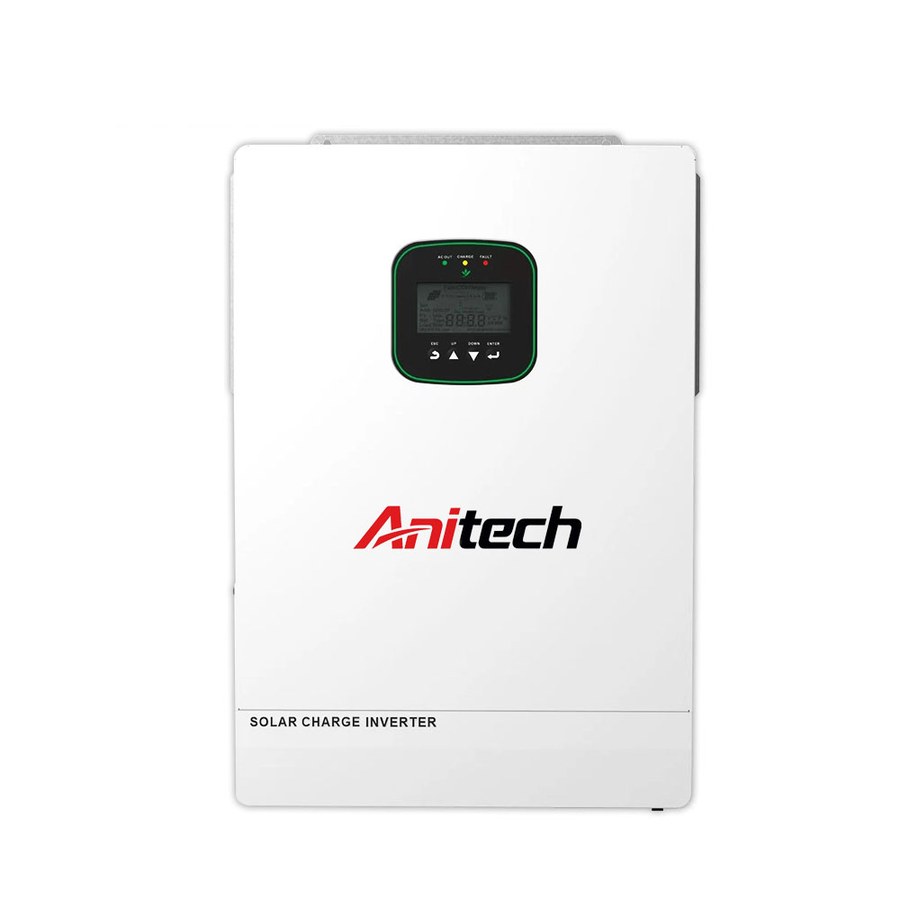
Instead of asking only, “How powerful is this inverter?”, a more useful evaluation asks four questions.
First, how effectively can it accept solar energy?
Second, how well can it coordinate charging and discharging with the battery?
Third, how reliably can it supply the intended loads?
Fourth, how intelligently can it manage transitions between solar, battery, and grid power?
This four-question framework gives a more complete picture of inverter performance.
For example, high rated output provides little benefit if the battery cannot supply enough discharge current. A wide PV input capability is less useful if the proposed module strings fall outside the MPPT operating range. Backup capability also matters little if the critical-load architecture has not been designed correctly.
System performance is therefore created by compatibility between components, not by the specification of one device in isolation.
Conclusion
A solar hybrid inverter is best understood as the control center of a solar-plus-storage system.
It converts electricity, but its more important role is deciding how energy should move among solar panels, batteries, electrical loads, and the grid.
When selecting one, you should evaluate far more than rated output. PV input limits, MPPT range, battery voltage, battery communication, charging and discharging capability, phase configuration, backup requirements, monitoring functions, installation conditions, and future expansion all influence the final system.
A well-matched inverter allows the PV array, battery, and loads to operate as a coordinated energy system rather than a collection of separate components.
That system-level perspective is the most useful starting point for designing reliable solar-plus-storage projects.
よくある質問
What is the main purpose of a solar hybrid inverter?
A solar hybrid inverter converts solar DC power into usable AC electricity while coordinating the solar array, battery, grid, and loads. Its key advantage is intelligent energy routing, allowing available power to be used, stored, or exchanged according to system conditions and operating priorities.
Can a solar hybrid inverter work without a battery?
Some solar hybrid inverter designs can operate without a connected battery, but functionality depends on the model. Features such as stored-energy backup obviously require battery storage, so always confirm the manufacturer’s supported operating modes before designing the system.
Can a solar hybrid inverter provide power during an outage?
It can when the inverter supports backup operation and the system includes suitable battery storage and correctly configured backup circuits. A hybrid inverter alone does not guarantee whole-system backup; output capability, battery power, wiring, and critical-load selection all matter.
How do I choose the right size solar hybrid inverter?
Start with simultaneous load demand and startup loads, then consider PV array characteristics, battery discharge capability, phase type, and future expansion. Do not select an inverter only by matching its rating to panel capacity because the entire system must operate within compatible electrical limits.
What is the difference between a solar hybrid inverter and an on-grid inverter?
An on-grid inverter mainly manages solar generation and grid interaction, while a solar hybrid inverter is designed to integrate battery storage as well. This allows more flexible energy routing, stored-energy use, and backup functions when the complete system is configured to support them.
Need Help Choosing the Right Solar Hybrid Inverter?
If you’re unsure which solar hybrid inverter best matches your PV array, battery system, backup requirements, or expected loads, our team can help you evaluate the key technical factors. Contact our technical team for support in matching inverter capacity, battery compatibility, system configuration, and application requirements. Build your solar-plus-storage system around components that are designed to work together reliably.