















Contents
Buying priorities: UAV drone battery
Understand the battery category before comparing models. The practical priorities are chemistry, form factor, electrical limits and application requirements. A useful buying decision should end with a model-specific data sheet checked against the host device, rather than an unsupported assumption based on a category label.
This guide explains the purchasing and engineering questions behind “UAV drone battery”. It is written for equipment designers, importers and purchasing teams. Start with the exact application and model, then compare the electrical requirements, physical integration and evidence needed to approve a sample. The sections below connect the central decision with the checks needed for repeatable supply and reliable use.
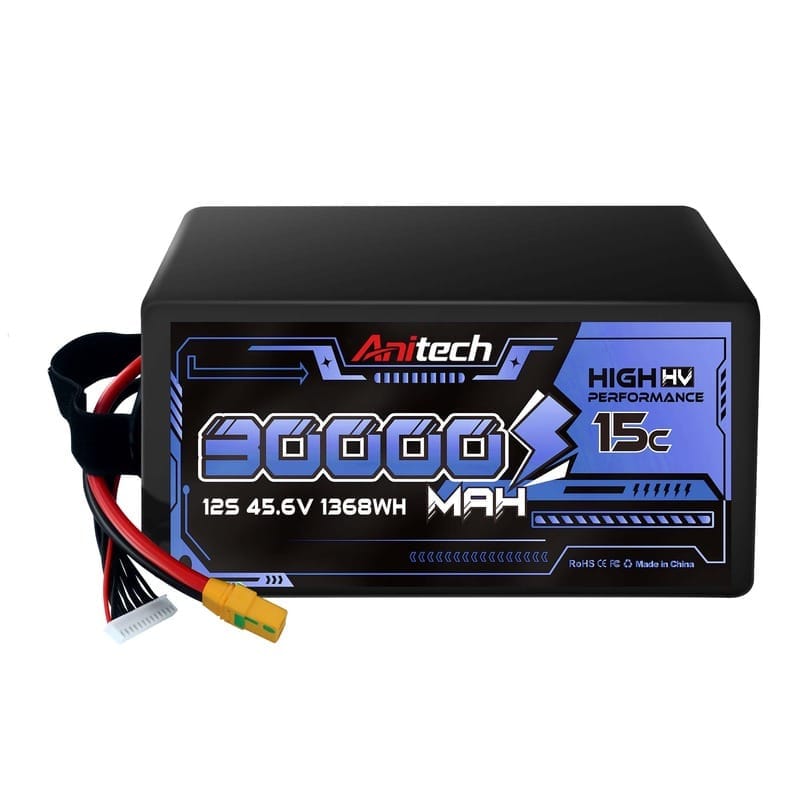
UAV batteries must support the entire mission profile
A UAV battery selection begins with the aircraft's approved electrical and mechanical interface. Cell count, maximum charged voltage, connector polarity, power capability and mounting all affect compatibility. Smart communication or authentication requirements may also apply. A physically fitting pack can still be unsuitable for the flight controller, charger or telemetry system. Confirm the platform requirements before comparing nominal capacity.
Flight time depends on the relationship between usable energy and power demand. Aircraft mass, payload, wind, temperature, route and reserve policy all affect the result. The heaviest battery is not necessarily the one that gives the longest safe mission. Compare candidates on the same aircraft using the same payload and mission sequence, and stop the test according to predetermined limits. Keep bench qualification separate from supervised operational flight validation.
Fleet management should track individual battery identity, charge history, mission use, measured deterioration and damage reports. Agricultural spraying, inspection and mapping produce different duty cycles and turnaround requirements. Plan enough packs and approved charging capacity to avoid rushing hot batteries back into service. Balance connector condition, cell imbalance and swelling checks belong in the pre-use routine. An unresolved abnormality is a reason to remove the pack from the operational pool.
Read the specification as an operating envelope
Begin with the exact model identifier and revision. A category name narrows the search, but the data sheet establishes the operating envelope. Record nominal voltage, maximum and minimum operating voltage, rated capacity, continuous current, any pulse limit, temperature ranges and physical dimensions. Check whether capacity is specified at the cell level or for the complete assembly. If two quotations use different test currents or discharge cutoffs, their capacity figures cannot be compared directly.
Build a requirement table with one row for every device constraint. Add a separate column for the supplier's evidence and another for the remaining verification. For example, a voltage window may be supported by a data sheet while a connector fit still needs a sample. This makes omissions visible before the purchasing decision. It also prevents a conversation about a convenient headline number from replacing a complete compatibility review.
Separate rated capability from the conditions of use. Continuous operation, intermittent operation, cold starts and prolonged storage can produce different results from the same battery. A laboratory discharge curve may be useful without describing the whole application. Keep a copy of its test method and use it to decide which additional tests are needed. Ask the supplier to explain any undefined term instead of inserting an assumption into the product specification.
The final output should be a controlled model specification rather than a collection of screenshots and messages. Include the approved data sheet, drawing, terminal identification, operating restrictions and revision date. Link exceptions to written agreement. When a component or process changes, compare the revision against this baseline and decide which tests must be repeated before approving further deliveries.
Use a requirements matrix to narrow the short list
Start by listing the conditions that a candidate must satisfy to enter the evaluation. These include the equipment's voltage window, realistic current demand, available space, permitted mass and environment. Mark genuinely mandatory requirements separately from preferences. A model that misses a required voltage or mounting limit should not remain on the short list merely because it offers a larger nominal capacity or an attractive unit price.
For the remaining candidates, rank the evidence rather than the presentation. A complete, model-specific data sheet and a repeatable test result are more useful than a broad product-family claim. If one supplier reports capacity at a different cutoff voltage, request a comparable result. If a claim cannot be verified, leave it unresolved in the selection table. Do not turn missing information into an assumed pass.
Choose the smallest test set that resolves the purchasing decision. Mechanical fit, a representative load run, inspection of the interface and a review of the operating limits often identify unsuitable candidates early. Additional qualification should then address the application risks that remain. Agree on instruments, ambient conditions, sample identity and acceptance limits so that the buyer and supplier can reproduce the findings.
Document why the chosen model fits the use case and why alternatives were rejected. The decision should remain understandable after the original engineer or buyer leaves the project. Keep the test records alongside the commercial quotation and approved drawing. This also makes later substitutions easier to evaluate, because the purchasing team can compare a proposed replacement against the original requirements rather than against memory.

Measure peak demand and voltage sag
Capture the current waveform during startup and the most demanding normal operation. Record peak amplitude, duration, repetition rate and the resting interval between events. A short peak and a sustained load can produce different electrical and thermal stresses, even when they share the same maximum current. Ask the supplier to identify the conditions behind any pulse-current rating and confirm whether the complete assembly, connector and wiring were included.
Measure voltage at the battery terminals and at the equipment input. The difference reveals loss in cables, contacts and interconnections. A device reset can result from that interface loss even when the battery itself remains within its stated limits. Test at representative partial discharge and temperature, because a fresh, warm sample may conceal a problem that appears later in normal service.
Use the equipment's minimum operating voltage as one acceptance boundary. Also define permitted temperature rise and protective behavior. Do not raise a cutoff or disable protection merely to complete a test. A candidate that reaches an operating limit should be reviewed against the cell, pack and host requirements before any design change is considered. High-current tests require appropriate fixtures and qualified personnel.
Retain the time traces rather than only reporting the highest current. A supplier can use the traces to distinguish a cell limitation from an interconnect or protection issue. Compare candidates with the same fixture and the same starting condition. If the product needs repeated pulses, include enough events to reveal heating and recovery effects. One successful startup is useful evidence, but it is not a complete duty-cycle qualification.
Check the maximum assembly envelope
Request a dimensioned drawing with tolerances and a clear definition of what is included. The battery envelope may need to include protective boards, wraps, tabs, wiring, connectors, handles or mounting features. Allow space for installation, insulation and the routing of cables. A nominal cell dimension can be unsuitable for a finished assembly if these necessary components were omitted from the original packaging concept.
Review the worst-case combination of battery and host tolerances. A sample that fits one prototype does not prove that every production unit will fit every enclosure. Check the points that locate and retain the battery, the surfaces that carry load and the clearance around vulnerable areas. Pouch seals, cell wraps and connector exits should not be used as unintended bearing or clamping surfaces.
Match enclosure claims to the installed condition. An ingress-protection statement should identify the tested assembly and any limitations involving connectors, seals, orientation or mounting. It is not a blanket permission for immersion or aggressive cleaning. Thermal paths and ventilation also need to be considered alongside physical fit. An enclosure that protects against handling damage can still affect operating temperature.
Use production-intent parts for the fit review and retain the approved drawing revision. Include the removal method, servicing clearance and transport restraint in the assessment. If the design changes, identify which interface dimensions and load paths are affected. The mechanical acceptance record should make it clear whether a change can be approved by drawing review or whether a new assembled sample is necessary.
Compare evidence and purchasing options
| Evidence level | What it helps establish | What still needs checking |
|---|---|---|
| Cell data sheet | Cell electrical and thermal limits | Pack construction and host compatibility |
| Finished battery specification | Assembly dimensions, interfaces and protection | Performance in the target equipment |
| Application trial | Behavior with the real load and installation | Repeat-production consistency |
| Production acceptance record | Conformity of delivered units or lots | Long-term operation and controlled changes |
Turn the evaluation into an acceptance specification
Before approving the proposed solution for UAV drone battery, collect the identified model data sheet, the controlled drawing and the relevant sample results in one acceptance record. Assign an owner to every open question. Record the test conditions and limits next to the measurement so that a later buyer can understand the result without reconstructing the original discussion.
Agree which characteristics will be checked on delivered units or lots. A satisfactory engineering sample and a commercial quotation serve different purposes. The first helps establish suitability, while the second defines the supply arrangement. Repeat orders should reference the approved construction, packaging and evidence requirements. Changes should trigger a review of the affected interfaces and tests.
Discuss your battery requirements with Annaite
For projects involving UAV drone battery, send Annaite the equipment type, voltage window, current demand, required service duration, available dimensions and expected order quantity. Include the connector details, intended market and the measurements that will determine sample approval. A clear brief helps the team assess a standard model or discuss customization without leaving critical compatibility questions unresolved.
Explore the related battery product category, review Annaite OEM and ODM support, or send a project inquiry.
For independent background, consult NASA lithium-ion battery risk overview. This resource provides general context and does not verify a particular battery model.
Frequently asked questions
What should a buyer define before requesting a quote?
For UAV drone battery, begin with the host equipment and its operating limits. Specify chemistry, form factor, electrical limits and application requirements. Include expected quantity, destination market and the evidence needed for approval. Mark unresolved values as open questions so that the supplier can respond to a clear technical brief.
Can a similar-looking battery be used as a substitute?
Appearance and a matching connector are insufficient. Confirm chemistry, the complete voltage window, current capability, dimensions and the required protection. Obtain the equipment maker’s approval where applicable and qualify the proposed substitute in the finished system.
How should supplier performance claims be checked?
Request the exact model and the conditions behind the claim. The most useful evidence for this decision is a model-specific data sheet checked against the host device. Keep cell-level, finished-assembly and application results separate, because each establishes a different part of the purchasing decision.
What belongs in a sample-approval record?
Record sample identity, specification and drawing revisions, test conditions, measured results and any approved exceptions. Include the connector and charging configuration where relevant. Repeat affected checks if the construction changes before production.
What information helps Annaite review a project?
Share your application, intended service interval, electrical requirements, available space and order quantity. For UAV drone battery, also identify the main constraint or unresolved question. Annaite can then review a standard product or discuss an OEM configuration against your brief.